Photographer
Zanele Muholi
Zanele Muholi (born 1972) is a South African photographer and self-described ‘visual activist’ whose groundbreaking body of work confronts the complexities of race, gender, and sexuality in post-apartheid South Africa and across the broader African diaspora. Based in Johannesburg, Muholi emerged during a transformative period in South African contemporary art, dedicating their camera to documenting, honoring, and archiving the experiences and visibility of Black lesbian, gay, bisexual, transgender, and intersex individuals.
Muholi’s visual language is characterized by an uncompromising combination of formal rigor, intimacy, and deliberate political engagement. In contrast to conventional documentary photojournalism that often exoticizes or victimizes marginalized subjects, Muholi approaches portraiture as a collaborative act of empowerment and self-representation. Their method emphasizes direct, sustained eye contact between subject and viewer, asserting dignity, self-determination, and psychological presence. In self-portraiture, Muholi frequently intensifies skin tones to a deep, sculptural blackness while incorporating found objects, domestic materials, and culturally symbolic items into elaborate headpieces and costumes, transforming personal identity into a critique of historical racism and exoticizing Western gazes.
Among Muholi’s definitive bodies of work is ‘Faces and Phases’, a long-term portraiture archive initiated in the mid-2000s that methodically chronicles Black queer and trans individuals at various stages of their lives, providing a vital counter-archive against systemic violence and erasure. Another pivotal series, ‘Somnyama Ngonyama, Hail the Dark Lioness’, turns the lens inward through highly stylized self-portraits addressing labor, historical oppression, and the politics of Black embodiment. These seminal projects have solidified Muholi’s standing as one of the most vital figures in global contemporary portraiture.
Muholi’s work has been exhibited extensively at premier cultural institutions worldwide, including major solo retrospectives at Tate Modern, the Studio Museum in Harlem, and the National Museum of Women in the Arts, alongside significant international art surveys such as the Venice Biennale. Honored with distinctions such as the Chevalier de l’Ordre des Arts et des Lettres, Muholi has expanded their practice to include sculpture, film, and community-based arts education, reshaping the landscape of modern African photography.
For photobook collectors, Muholi’s monographs serve as essential documents where conceptual rigor aligns with activist urgency. Publications centered on ‘Faces and Phases’ and ‘Somnyama Ngonyama’ offer comprehensive sequencing and exceptional print dynamics that preserve tonal nuance, making them indispensable foundational additions to contemporary photography collections.
〔PBL-BIO/2〕
Zanele Muholi (b. 1972, Umlazi, South Africa) is a visual activist and photographer who grew up in the aftermath of apartheid. They studied advanced photography at the Market Photo Workshop and later earned a master’s degree from the University of the Arts London. Muholi co-founded the Forum for the Empowerment of Women (FEW) and the queer visual media platform Inkanyiso. Their work, especially the long-term series ‘Faces and Phases,’ chronicles the lives of Black lesbian, gay, transgender, and intersex individuals in South Africa, using portraiture to assert presence and challenge societal erasure. Muholi has exhibited internationally and received numerous awards, including the 2016 Infinity Award from the ICP.


Selected Works & Key Projects
A source-backed introduction to individual photographs and significant bodies of work.
Key projects

Project · 2002–2006
Only Half the Picture
Muholi’s first photographic series grew from their involvement with the Forum for the Empowerment of Women. Made through travel to South African townships, it documents queer-community survivors of hate crimes while also recording intimacy. That deliberate pairing matters: gestures of affection move the project beyond an account of violence toward hope and care. It merits selection as the foundational photographic statement of Muholi’s visual activism, establishing the tender, collaborative attention to Black queer life that later projects expand.
View source ↗Project · 2006
Faces and Phases
Begun in 2006, Faces and Phases is an ongoing, expanding archive of portraits of Black lesbians and transgender and gender-nonconforming people. Muholi gives each photograph the sitter’s full name, location, and date, making portraiture an identity document rather than an anonymous type. The sustained project records recurring participants across time, celebrating, commemorating, and preserving their presence amid continued discrimination. It merits selection because MoMA identifies it as an essential corrective to a gap in South African visual history, joining serial portraiture to a specifically Black queer archival purpose.
View source ↗Selected photographs

2011 · Vosloorus, Johannesburg
Sunday Francis Mdlankomo, Vosloorus, Johannesburg
This 2011 gelatin-silver print is a named, located portrait within Faces and Phases. Its importance lies in how a single sitter carries the project’s larger method: a Black South African LGBTI community member is presented through a direct, face-to-face photographic encounter rather than as an anonymous illustration of a social issue. Muholi described the project as a record of presence for the future. Selected from the series because it is held by MoMA and accompanied by the artist’s audio commentary, it offers an especially accessible entry into that archive-building purpose.
Work source ↗
2011 · KwaThema Community Hall, Springs, Johannesburg
Anele, 'Anza' Khaba, KwaThema Community Hall, Springs, Johannesburg
Anele, ‘Anza’ Khaba is a 2011 gelatin-silver portrait from Faces and Phases. MoMA characterizes the series as an ongoing project that merges art and activism and depicts Black South African LGBTI people subjected to discrimination and dehumanization. The work therefore matters as a precise, fully titled instance of Muholi’s counter-archive: the sitter is named and situated rather than generalized. Its black-and-white format also exemplifies the series’ face-to-face encounter between photographer and participant. It merits selection as a museum-held example of portraiture used to assert existence, aesthetics, and resistance.
Work source ↗
2011 · KwaThema Community Hall, Springs, Johannesburg
Debora Dlamini, KwaThema Community Hall, Springs, Johannesburg
This 2011 gelatin-silver print belongs to Faces and Phases, the long-term portrait project that MoMA describes as merging art and activism. By preserving the sitter’s name and the specific community-hall location in its title, the photograph does the documentary work central to the series: it affirms an individual Black queer presence within a visual field where such people were marginalized. The portrait’s direct encounter exemplifies Muholi’s stated face-to-face approach. It merits selection as a collection-based work through which the project’s political stakes remain inseparable from formal, carefully made black-and-white portraiture.
Work source ↗
2011 · KwaThema Community Hall, Springs, Johannesburg
Lynette Mokhooa, KwaThema Community Hall, Springs, Johannesburg
Lynette Mokhooa is a 2011 gelatin-silver print in MoMA’s collection and part of Faces and Phases. As in the project at large, the full title identifies the participant and the site of the encounter, resisting the historical erasure of Black queer lives through specificity. MoMA describes the series’ black-and-white portraits as face-to-face confrontations and as positive imagery of Black queer existence and resistance. This work merits selection not as an isolated emblem, but as one carefully identified component of a growing collective portrait—an archive whose significance depends on the accumulated dignity of individual sitters.
Work source ↗
2016 · Gothenburg, Sweden
Vile, Gothenburg, Sweden
Vile is a 2016 gelatin-silver print in MoMA’s collection. In the accompanying artist audio, Muholi identifies Somnyama Ngonyama as a self-portrait series of high-contrast black-and-white images and explains that self-exposure is necessary to their photographic work with others. This makes the photograph significant as a work in which self-portraiture is tied to a broader visual history of Black and queer-trans existence, rather than presented as private autobiography alone. It merits selection because it gives a named, dated museum-held form to that central shift: the artist becomes a participant in the visibility they seek to create.
Work source ↗-
2001
Education
Enrols at the Market Photo Workshop
Muholi enrolled at the Market Photo Workshop in Johannesburg, the school founded by photographer David Goldblatt. This training became an important early institutional foundation for a practice that would join photography to questions of representation and social change.
Source: Fondation Louis Vuitton Verified Sep 4, 2026
-
2002
Career milestone
Co-founds the Forum for Empowerment of Women
Muholi co-founded the Forum for Empowerment of Women (FEW). The organisation’s establishment is a significant early marker of Muholi’s community-based activism, preceding the long-term photographic projects through which they would pursue visibility for Black LGBTQIA+ people.
Source: International Center of Photography Verified Sep 4, 2026
-
2003
Education
Completes Advanced Photography studies
Muholi earned a degree in Advanced Photography at the Market Photo Workshop in Newtown, Johannesburg. The completion of this program marks the end of their formative photographic training there and precedes the serial portrait practice for which they became internationally known.
Source: National Museum of Women in the Arts Verified Sep 4, 2026
-
2006–ongoing
Series
Begins Faces and Phases
Muholi began Faces and Phases, an ongoing project of sustained portraiture. MoMA identifies it as a realization of the Market Photo Workshop’s commitment to photography as an agent of change and representation. The series became central to Muholi’s public practice of recording and affirming Black LGBTQIA+ lives.
Source: Museum of Modern Art Verified Sep 4, 2026
-
2009
Education
Completes MFA in Documentary Media
Muholi completed an MFA in Documentary Media at Ryerson University in Toronto. This graduate qualification coincided with an expanding practice across photography, video, installation, and community organising, strengthening the documentary and archival dimensions of their work.
Source: International Center of Photography Verified Sep 4, 2026
-
2009
Career milestone
Founds Inkanyiso
Muholi founded Inkanyiso, described by ICP as a forum for queer and visual-activist media. Its creation formalized another platform for the visual-activist commitments that run through Muholi’s artistic work and community engagement.
Source: International Center of Photography Verified Sep 4, 2026
-
2010
Photobook
Faces and Phases published by Prestel
The book Faces and Phases was published by Prestel. It presented Muholi’s black-and-white portrait series, begun in 2006, which commemorates and celebrates Black lesbian lives. The publication gave the ongoing project a durable photobook form and extended its reach beyond exhibition contexts.
Source: Stevenson Verified Sep 4, 2026
-
2013
Award
Receives major international recognition
Muholi received the Fine Prize for an emerging artist at the Carnegie International, a Prince Claus Award, and the Index on Censorship Freedom of Expression art award. In the same year, Faces and Phases was shown at the South African Pavilion of the 55th Venice Biennale, connecting the project to major international exhibition platforms.
Source: International Center of Photography Verified Sep 4, 2026
-
1 May–1 November 2015
Exhibition
Zanele Muholi: Isibonelo/Evidence at the Brooklyn Museum
The Brooklyn Museum presented Zanele Muholi: Isibonelo/Evidence from 1 May to 1 November 2015. The museum described it as its largest US museum exhibition to date devoted to Muholi, bringing together photography, video, installation, and community-organising contexts, including Faces and Phases, Being, and Weddings.
Source: Brooklyn Museum Verified Sep 4, 2026
-
2016
Award
Receives ICP Infinity Award for Documentary and Photojournalism
The International Center of Photography named Muholi the 2016 recipient of its Infinity Award for Documentary and Photojournalism. The award recognised a practice in which long-term photographic work, visual activism, and the making of a Black queer and trans visual history are closely connected.
Source: International Center of Photography Verified Sep 4, 2026
-
6 June 2024–26 January 2025
Exhibition
Exhibition at Tate Modern
Tate Modern presented an exhibition titled Zanele Muholi from 6 June 2024 to 26 January 2025. Tate issued a limited-edition maquette in connection with the exhibition, linking Muholi’s photographic practice to the bronze sculpture Muholi V, 2023 and to the artist’s exploration of rest and self-preservation for Black queer people.
Source: Tate Verified Sep 4, 2026
-
6 February 2026
Award
Named 2026 Hasselblad Award laureate
The Hasselblad Foundation announced Muholi as the 2026 Hasselblad Award laureate. The Foundation stated that the award recognises Muholi’s use of photography and activism to claim visibility, dignity, and respect for Black queer subjects, and identified the prize as the world’s largest photography award.
Source: Hasselblad Foundation Verified Sep 4, 2026
Representation
Yancey Richardson Gallery
Zanele Muholi is represented by Yancey Richardson Gallery in New York. The gallery has presented her solo exhibitions and manages international sales of her prints, contributing to her prominence in global contemporary photography.
Verified 2026-09-04Wikipedia
Representation
Stevenson Gallery
Muholi is represented by Stevenson Gallery in Cape Town and Johannesburg, a leading gallery for African contemporary art. Stevenson has represented her since early in her career and has mounted numerous exhibitions of her work across South Africa.
Verified 2026-09-04Wikipedia
Collection
Museum of Modern Art (MoMA)
Muholi's photographs are held in the permanent collection of the Museum of Modern Art in New York. The museum has acquired prints from her 'Faces and Phases' series, affirming her importance in institutional art history.
Verified 2026-09-04Wikipedia
Collection
Tate Modern
Tate in London holds examples of Muholi's portraits in its collection. Her work is recognized in the broader context of British and international contemporary art collections.
Verified 2026-09-04Wikipedia
Collection
Solomon R. Guggenheim Museum
The Guggenheim Museum in New York includes Muholi's photographs in its collection. Her work is featured as part of a global survey of contemporary photography and visual activism.
Verified 2026-09-04Wikipedia
Zanele Muholi On Resistance (opens a new site)
In this Aperture interview, Renée Mussai and Muholi discuss Somnyama Ngonyama in relation to Black representation, self-portraiture, racial exclusion, and the making of a visual archive. Muholi explains the project’s use of the artist’s own face and connects particular photographs to experiences of racism, travel, and border scrutiny. The conversation also addresses Faces and Phases as part of a sustained commitment to recording Black LGBTQIA+ and gender-nonconforming lives.
Zanele Muholi's Faces & Phases (opens a new site)
Aperture presents a conversation about Faces and Phases, Muholi’s long-running portrait project focused on Black lesbians in South Africa. The article describes the project as beginning in 2006 and notes its accumulation into hundreds of portraits, often shown in dense grids. It is a valuable editorial resource for understanding how portraiture, visibility, memorialization, and activism are joined in one of Muholi’s central bodies of work.
Questions of Practice: Photographer Zanele Muholi on What it Means To Be a “Visual Activist” (opens a new site)
Produced by the Pew Center for Arts & Heritage, this video records Muholi speaking during a year-long residency with the Philadelphia Photo Arts Center. It focuses on why Muholi uses the term “visual activist” and places that discussion alongside the Women’s Mobile Museum, a collaborative project involving works by ten Philadelphia women, Muholi, and teaching artist Lindeka Qampi. The resource is particularly useful for studying Muholi’s language of practice and community-based exhibition work.
Zanele Muholi – ‘In My World, Every Human is Beautiful’ | Tate (opens a new site)
In this Tate film, Muholi introduces four key bodies of work and discusses photography and film as means of addressing race, representation, and LGBTQIA+ life in South Africa and beyond. The video is a direct artist-led overview of the concerns connecting Muholi’s major series. It is especially useful for viewers seeking a concise introduction to the artist’s own framing of visibility, community, and the social purpose of images.
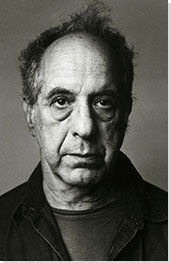
Robert Frank
Shared publisher: 5 Continents Editions, Aperture
19 photobook(s) in the library
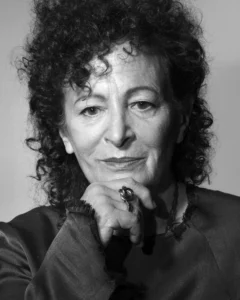
Nan Goldin
Shared publisher: 5 Continents Editions, Aperture
17 photobook(s) in the library
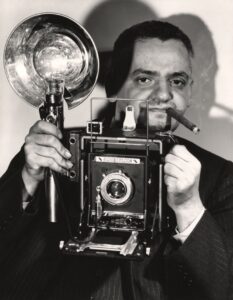
Weegee
Shared publisher: 5 Continents Editions, Aperture
14 photobook(s) in the library
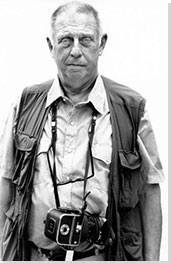
Lee Friedlander
Shared publisher: 5 Continents Editions, Aperture
13 photobook(s) in the library
COMMUNITY DISCUSSION
Discuss this entry
Share interpretations, reading notes, and source-aware questions. For catalog corrections, use the feedback form below.
No discussion yet. Start the first focused conversation.
Sign in to join the discussion.
Optionally receive a digest when related photobooks are added to the catalog.
See something incorrect? Sign in to suggest a correction or report an issue.