Photographer
Mary Ellen Mark
Mary Ellen Mark (1940–2015) was an American photographer whose career joined photojournalism, social documentary, and portraiture. Beginning in the late 1960s, she worked during a period when illustrated magazines still offered photographers space for sustained reporting, while museums and galleries were increasingly recognizing documentary photography as an artistic practice. Her subjects ranged widely across countries and institutions, but she became especially associated with people living outside conventional social visibility. The resulting archive is both a record of particular lives and a study of how a photographer negotiates proximity, vulnerability, and representation.
Mark is best known for emotionally direct, predominantly black-and-white photographs built through patient contact rather than detached observation. Her portraits often acknowledge the subject’s awareness of the camera: posture, clothing, gesture, and setting become active parts of self-presentation. This distinguishes her work from more anonymous forms of street photography. She sought intimacy and narrative clarity, yet her photographs also invite ethical scrutiny. Their emotional force depends on unequal encounters between a celebrated photographer and people who were frequently poor, institutionalized, or otherwise marginalized. At their strongest, however, the pictures resist reducing individuals to social categories; dignity, humor, theatricality, and contradiction remain visible beside hardship.
Several sustained bodies of work demonstrate that approach. Her photographs of Indian circus performers brought together backstage observation, formal portraiture, and the spectacle of itinerant performance, preserving a distinctive social world without treating it merely as exotic entertainment. Her work concerning Mother Teresa placed public religious identity alongside the routines of care and suffering around her. In 1983, while photographing a story for Life, Mark met the Seattle teenager known as Tiny and maintained a long photographic relationship with her. That continuity transformed a magazine encounter into a longitudinal account of aspiration, precarity, family, and adulthood. A documented 1990 series on hospital patients in Turin further shows her recurring attention to institutional spaces and to people whose individuality might otherwise be eclipsed by diagnosis or circumstance.
Mark published nineteen books, and her photographs were exhibited internationally, giving her work a life beyond its original magazine contexts. For photobook readers, that transition is crucial: an individual image may deliver an immediate emotional encounter, but a book can restore duration, recurrence, and social context. Collectors should therefore look beyond famous portraits and attend to how pictures of performers, caregivers, patients, and families are sequenced into narratives. Books centered on the Indian circus, Mother Teresa, or Mark’s long relationship with Tiny offer useful entry points because they reveal both her visual consistency and the changing responsibilities created by sustained access. Her legacy lies not simply in photographing difficult lives, but in making the relationship between witness and subject impossible to ignore.
〔PBL-BIO/2〕


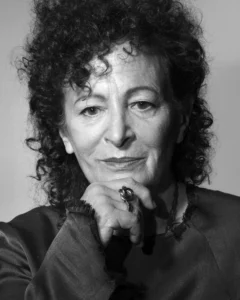
Nan Goldin
Shared publisher: Aperture, Phaidon Press Limited
17 photobook(s) in the library
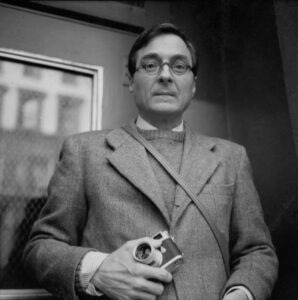
William Eggleston
Shared publisher: Aperture, Steidl
26 photobook(s) in the library
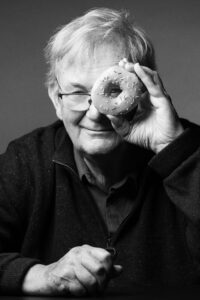
Martin Parr
Shared publisher: Aperture, Phaidon Press Limited
21 photobook(s) in the library
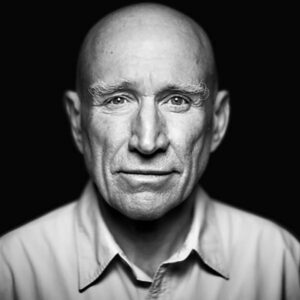
Sebastiao Salgado
Shared publisher: Aperture, Phaidon Press Limited
21 photobook(s) in the library
COMMUNITY DISCUSSION
Discuss this entry
Share interpretations, reading notes, and source-aware questions. For catalog corrections, use the feedback form below.
No discussion yet. Start the first focused conversation.
Sign in to join the discussion.
Optionally receive a digest when related photobooks are added to the catalog.
See something incorrect? Sign in to suggest a correction or report an issue.