Photographer
Don McCullin
Don McCullin, born in 1935 in a poor district of north London, is a British photojournalist best known for photographs of war, political violence, poverty, and urban hardship. His national service included work as an aerial photographer for the Royal Air Force, an experience that preceded his emergence in the 1960s as a prominent press photographer. Working for publications including The Observer, he covered major conflicts across Africa, Asia, and the Middle East and developed a career that has extended across seven decades.
McCullin’s visual language is associated with forceful black-and-white contrast, compressed tonal drama, and close attention to faces, bodies, and damaged environments. Rather than treating conflict as distant spectacle, he repeatedly placed the human consequences of violence at the center of the frame. His photographs can be formally controlled even when made amid disorder: gesture, eye contact, and surrounding debris often organize the image. This combination of compositional gravity and direct witness distinguishes his work from more detached reportage, although its aesthetic power also raises an enduring critical question—how beauty and suffering coexist within photographs made for public circulation.
Several interconnected bodies of work define his achievement. His coverage of twentieth-century wars in Africa, Asia, and the Middle East established his international reputation and recorded both combat and its effects on civilians. His photographs of urban strife and poverty in Britain extended the same ethical attention to conditions closer to home, showing that deprivation was not confined to distant battlefields. His early aerial-photography experience provides an instructive counterpoint to these later, intensely human encounters: the movement from surveying territory to confronting individual experience helps explain the moral and spatial tension within his mature work.
McCullin became widely known during the expansion of illustrated journalism in the 1960s, when magazines and newspapers gave documentary photographs a powerful role in shaping public understanding of conflict. Museums and galleries subsequently reframed his press images as part of photographic history; institutional collections such as the National Galleries of Scotland and representation by Hauser & Wirth indicate the work’s continuing movement between journalism and art. His historical importance rests not simply on proximity to danger, but on sustaining attention to vulnerability across different places and over an unusually long career.
For photobook collectors, McCullin is significant because a book can restore relationships that isolated, famous images tend to lose. Sequencing war, civilian suffering, British poverty, and other subjects across a career survey reveals recurring visual and ethical concerns rather than a succession of dramatic incidents. A broad retrospective publication is therefore a useful entry point: readers can study changes in subject, editing, tonal reproduction, and pacing before pursuing volumes centered on particular conflicts or periods. Careful black-and-white printing matters especially for work whose meaning depends upon shadow detail, stark contrast, and the physical texture of people and places.
〔PBL-BIO/2〕


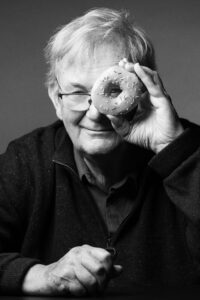
Martin Parr
Shared publisher: Aperture, GOST Books
21 photobook(s) in the library
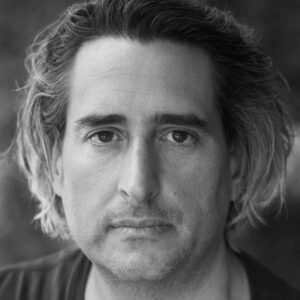
Gregory Crewdson
Shared publisher: Aperture, Skira
5 photobook(s) in the library
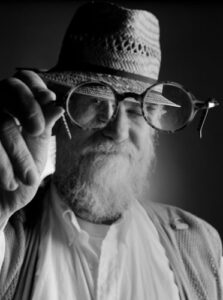
Larry Towell
Shared publisher: Aperture, GOST Books
4 photobook(s) in the library
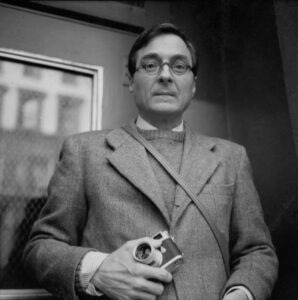
William Eggleston
Shared publisher: Aperture
26 photobook(s) in the library
COMMUNITY DISCUSSION
Discuss this entry
Share interpretations, reading notes, and source-aware questions. For catalog corrections, use the feedback form below.
No discussion yet. Start the first focused conversation.
Sign in to join the discussion.
Optionally receive a digest when related photobooks are added to the catalog.
See something incorrect? Sign in to suggest a correction or report an issue.