Photographer
Josef Koudelka
Josef Koudelka (born 1938 in Boskovice, Czechoslovakia) is a Czech-born French photographer whose humanistic and poetic approach has made him one of the most influential figures in postwar European photography. Trained as an aeronautical engineer, he photographed theater and Roma communities throughout the 1960s before devoting himself to photography full-time in 1967.
Koudelka gained international recognition for his clandestine documentation of the Soviet invasion of Prague in August 1968. His photographs, smuggled out and published anonymously under the initials “P.P.” (Prague Photographer), became emblematic images of the Prague Spring and earned him the Robert Capa Gold Medal in 1969. Forced into exile, he left Czechoslovakia in 1970 and soon joined Magnum Photos, beginning decades of itinerant travel across Europe and beyond.
His landmark photobooks Gypsies (1975) and Exiles (1988) established his reputation for deeply empathetic, high-contrast black-and-white photography. Beginning in the late 1980s, he embraced panoramic cameras to create sweeping studies of borders, ruins, and landscapes in works such as Chaos (1999), Wall (2013), and Ruines (2020). These projects examine the relationship between humanity, conflict, and the environment, expanding his visual language while maintaining his commitment to clarity, intensity, and moral witness.
Koudelka has received major international awards—including the Prix Nadar, Grand Prix National de la Photographie, Cartier-Bresson Award, and the Hasselblad Award—and his work has been exhibited at MoMA, the International Center of Photography, the Stedelijk, the Palais de Tokyo, and the Pompidou Centre. Naturalized as a French citizen in 1987, he remains a defining voice in documentary and expressive photography.
Josef Koudelka (born 10 January 1938) is a Czech-born French photographer. He began photographing Romani communities in Czechoslovakia in the 1960s, later publishing his iconic series Gypsies. In 1968 he documented the Soviet invasion of Prague, publishing the images anonymously as ‘P.P.’ to avoid reprisal. He left Czechoslovakia in 1970 and gained asylum in the United Kingdom, later moving to France. Since 1971 he has been a member of Magnum Photos. His later works include the long-term Exiles project and panoramic landscapes. He received the Hasselblad Award in 1992 and continues to work with panoramic cameras.


Selected Works & Key Projects
A source-backed introduction to individual photographs and significant bodies of work.
Key projects

Project · 1963–1970
Gypsies
Koudelka’s extended work among Roma communities was made through repeated visits to more than eighty locations in Slovakia, Romania, and the historic Czech regions of Moravia and Bohemia between 1963 and 1970. The Getty describes thousands of photographs made during long periods in Roma encampments and identifies the 1975 book Gypsies as a seminal publication. This project merits selection because it was a sustained, immersive body of work rather than a single assignment, and because its photographs and book-making materials formed a major component of the Getty retrospective.
View source ↗Project
Exiles
Exiles was first published as a book in 1988 and grew from Koudelka’s stateless years in Western Europe after he left Czechoslovakia. Getty describes photographs made while he traveled to Roma gatherings and to folk and religious festivals, identifying stray animals, solitary people, disregarded things, and displaced Roma as recurring signs of estrangement grounded in his daily experience of exile. It merits selection as a project because it turns the circumstances of displacement into a broad visual language rather than functioning as conventional reportage; Getty calls this body of work a cornerstone of its retrospective.
View source ↗Selected photographs

1965 · Kendice
Kendice
Kendice is a 1965 gelatin silver print in The Metropolitan Museum of Art’s collection. The Met identifies music as the subject through which the photograph visualizes human connection, and characterizes the image as a demonstration of Koudelka’s ability to make an ephemeral event permanent through photography. The visible scene of a violinist, a standing man, and a child gives that claim a concrete social form. It merits selection from the Gypsies work because the museum explicitly connects it both to his early central engagement with Roma life and to his formal handling of fleeting experience.
Work source ↗
1968 · Prague
Prague
This gelatin silver print is captioned Prague, 1968 in the Getty exhibition record. Its foregrounded wristwatch and the nearly empty boulevard behind it are visibly organized around a precise, personal marker of time. Within Getty’s account of Koudelka’s 1968 invasion photographs, the image belongs to work made during the Warsaw Pact occupation, whose negatives were smuggled west and whose images were reproduced worldwide. It merits selection because the picture condenses that documented historical event into a spare visual construction: one arm, one watch, and a city street held in suspended time.
Work source ↗
1968 · Czechoslovakia
Czechoslovakia
MoMA records Czechoslovakia as a 1968 gelatin silver print by Koudelka in its Photography Department, acquired with the Joseph Strick Fund. The photograph was included in Koudelka’s 1975 MoMA exhibition and in a 2006 collection rotation, establishing its recurring institutional presentation. The visible image places a brass band, balloons, and a crowd around a centrally framed man. It merits selection as a recognizable museum-held image from the period because it demonstrates how a single dense public scene can carry Koudelka’s interest in expressive, formally organized documentary photography, an approach MoMA’s 1975 materials describe as more formal and interpretive than reportorial.
Work source ↗-
1938
Career milestone
Born in Moravia, Czechoslovakia
Josef Koudelka was born in Moravia, Czechoslovakia, in 1938. Magnum identifies him as Czech/French and notes that he later became a naturalized French citizen.
Source: Magnum Photos Verified Sep 4, 2026
-
1961
Education
Begins an aeronautical-engineering career
Koudelka began his professional career as an aeronautical engineer in 1961. At the same time, he began photographing Gypsies in Czechoslovakia and theatrical productions in Prague, establishing parallel technical and photographic pursuits before committing to photography full time.
Source: Magnum Photos Verified Sep 4, 2026
-
1967
Career milestone
Turns to photography exclusively
After working in aeronautical engineering, Koudelka began working exclusively as a photographer in 1967. A Museum of Modern Art release records that his earlier photographic work was largely concerned with theatre, including work for the magazine Divadlo.
Source: The Museum of Modern Art Verified Sep 4, 2026
-
August 1968
Series
Photographs the Soviet-led invasion of Prague
During the Warsaw Pact invasion of Czechoslovakia, Koudelka photographed events in Prague. Magnum states that the pictures were circulated internationally without his name, under the initials P.P. (“Prague Photographer”), because of possible reprisals against him and his family.
Source: Magnum Photos Verified Sep 4, 2026
-
1969
Award
Receives the Robert Capa Gold Medal anonymously
Koudelka was anonymously awarded the Overseas Press Club’s Robert Capa Gold Medal in 1969 for his photographs of the 1968 Soviet invasion of Prague. Magnum’s biography links the anonymity to the photographs’ P.P. byline.
Source: Magnum Photos Verified Sep 4, 2026
-
May 1970
Career milestone
Leaves Czechoslovakia and remains in exile
Koudelka left Czechoslovakia in May 1970 after securing permission to travel abroad for 80 days. While passing through Paris, Magnum advised that his identity as the photographer of the 1968 invasion pictures could be discovered; he decided not to return to Prague and remained in England.
Source: Magnum Photos Verified Sep 4, 2026
-
1974
Representation
Becomes a Magnum member
Koudelka became a member of Magnum in 1974. This affiliation followed his departure from Czechoslovakia and placed his work within Magnum’s photographer-run cooperative; the Museum of Modern Art documented his membership in its 1975 exhibition release.
Source: The Museum of Modern Art Verified Sep 4, 2026
-
1975
Photobook
First book, Gypsies, is published
Koudelka’s first book, Gypsies, was published in 1975. Magnum identifies the book as his first and connects it to work that began while he was still pursuing engineering and photographing Roma people in Czechoslovakia.
Source: Magnum Photos Verified Sep 4, 2026
-
1987
Career milestone
Naturalized as a French citizen
Koudelka became a naturalized French citizen in 1987. Magnum’s biography identifies him as a Czech photographer born in 1938 who was naturalized French that year.
Source: Magnum Photos Verified Sep 4, 2026
-
1988
Photobook
Exiles is published
Exiles was published in 1988. In an Aperture interview, Koudelka explains that editor Robert Delpire gave the project its title and that the selected photographs were made mainly after Koudelka had left Czechoslovakia.
Source: Aperture Verified Sep 4, 2026
-
27 August 1992
Award
Receives the Hasselblad Award
Koudelka received the Hasselblad Award on 27 August 1992 in Gothenburg. The Hasselblad Foundation’s citation recognized his photographs of human conditions in different countries, including Roma daily life, festivities, and cultural heritage, and characterized his photo essays by formal rigor, poetic vision, human commitment, and social-documentary realism.
Source: Hasselblad Foundation Verified Sep 4, 2026
-
2018
Archive
Donation to Czech museum collections is presented
The Museum of Decorative Arts in Prague states that Koudelka donated nearly 2,000 photographs from his life’s work to Czech state institutions. In 2018, the museum presented a selection in the exhibition Koudelka: Returning, marking his eightieth birthday; the gift also led to works entering other Czech museum collections.
Source: Museum of Decorative Arts in Prague Verified Sep 4, 2026
Representation
Magnum Photos
Josef Koudelka became a member of Magnum Photos in 1971, joining the influential cooperative agency that represents many of the world’s foremost documentary photographers. His long-standing membership has enabled worldwide distribution of his work, from his early reportage of the 1968 Warsaw Pact invasion of Czechoslovakia to his later landscape projects. Magnum’s endorsement and support positioned Koudelka within the highest ranks of humanist photography, facilitating exhibitions, publications, and preserving his legacy as a photojournalist of remarkable emotional depth.
Verified 2026-09-04Magnum Photos
Archive
Bibliothèque nationale de France
In 2013, Josef Koudelka donated his personal archive to the Bibliothèque nationale de France (BnF). This comprehensive archive includes negatives, prints, contact sheets, and personal documents spanning his five-decade career. The donation ensures the permanent preservation and scholarly accessibility of his principal projects—such as the celebrated 'Gypsies' series and the historic 'Invasion Prague' photographs—as well as his later panoramic landscapes. The BnF’s acquisition underscores Koudelka’s national significance to France, his adopted country, and provides future researchers with rich primary source material.
Verified 2026-09-04Wikipedia
Collection
Museum of Modern Art (MoMA)
The Museum of Modern Art in New York holds a significant collection of photographs by Josef Koudelka, including prints from his most important series. MoMA’s acquisition of his work places him alongside canonical figures of twentieth-century photography and confirms his influence on the humanistic documentary genre. His images, regularly exhibited in the museum, offer an enduring record of political upheaval and cultural marginality. The MoMA collection serves as a testament to Koudelka’s critical acclaim and ensures continued public engagement with his powerful visual narratives.
Verified 2026-09-04Wikipedia
Josef Koudelka – ICP Archive (opens a new site)
International Center of Photography archive entry for Josef Koudelka, documenting his personal exhibitions, prints, and related materials. The archive preserves works and contextual data, useful for scholarly research.
Josef Koudelka – Wikipedia (opens a new site)
Wikipedia article on Czech-French photographer Josef Koudelka (b. 1938). Covers his early theatrical engineering studies, covert documentation of the Soviet invasion of Prague in 1968, and influential photo books like Gypsies and Exiles. Highlights his Magnum membership, major retrospectives, and ongoing influence on documentary photography.
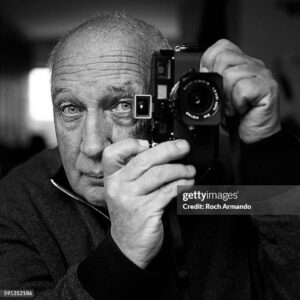
Raymond Depardon
Shared publisher: Aperture, Éditions Xavier Barral
16 photobook(s) in the library
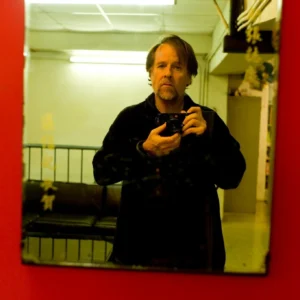
Alex Webb
Shared publisher: Aperture, Thames & Hudson
15 photobook(s) in the library
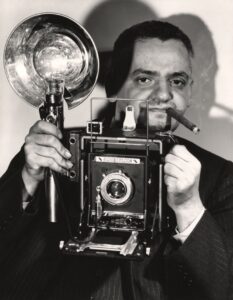
Weegee
Shared publisher: Aperture, Thames & Hudson
14 photobook(s) in the library
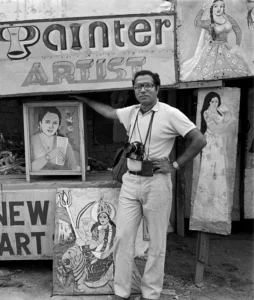
Raghubir Singh
Shared publisher: Aperture, Thames & Hudson
10 photobook(s) in the library
COMMUNITY DISCUSSION
Discuss this entry
Share interpretations, reading notes, and source-aware questions. For catalog corrections, use the feedback form below.
No discussion yet. Start the first focused conversation.
Sign in to join the discussion.
Optionally receive a digest when related photobooks are added to the catalog.
See something incorrect? Sign in to suggest a correction or report an issue.