Photographer
Milton Rogovin
Milton Rogovin (1909–2011) was an American social documentary photographer whose work centered on the lives of poor and working-class people. Born in New York City, Rogovin received a degree in optometry from Columbia University in 1931. He practiced in Buffalo, but his active involvement in progressive causes led to his being blacklisted during the Red Scare of the 1950s. Forced out of his profession, he turned to photography as a direct way to confront social injustice. Together with his wife Anne, he devoted more than fifty years to documenting communities that remained largely invisible to mainstream society.
Rogovin developed a direct, respectful visual language. Rather than capturing subjects in moments of sensational crisis, he created collaborative portraits that emphasized human dignity and individuality. His approach relied on sustained commitment: he returned to the same neighborhoods repeatedly, building mutual trust over decades. This distinguished him from photojournalists pursuing dramatic events. Rogovin’s subjects included African American families in Buffalo’s Lower West Side, Native Americans, coal miners, steelworkers, and immigrants. He avoided an exoticizing gaze, allowing people to present themselves on their own terms, supported throughout by Anne’s fieldwork and interviews.
His most celebrated achievement is the series “The Forgotten Ones,” a term Rogovin used for impoverished Buffalo residents he photographed starting in the 1960s. This work brought national attention to the inner-city poor when published as a book. Another major contribution was his triptych format, in which he photographed the same individuals or families across intervals of roughly a decade. These sequential portraits showed the physical and social effects of aging and economic change, standing as an innovative milestone in documentary practice. His photographs are held in major institutions, including the Center for Creative Photography and the National Galleries of Scotland.
Rogovin’s career must be understood within Cold War politics. Blacklisting ruined his original livelihood but redirected him toward an art that countered political repression. His images resonate with traditions established by Jacob Riis and Lewis Hine, yet Rogovin firmly rejected sentimental paternalism. His goal was not to shock viewers, but to record ordinary daily life as enduring resilience. Recognized with major retrospectives, he is now seen as a crucial link connecting 1930s social documentary with modern community-based photography, aligning with labor and civil rights struggles without becoming didactic.
For collectors, Rogovin’s original prints and photobooks hold historical and visual importance. Publications accompanying “The Forgotten Ones” offer straightforward, faithful reproductions of his stark black-and-white tonalities. Collectors seeking a meaningful entry point should look for museum editions of his triptych series, which distill his core ethos of revisiting subjects. Because he worked outside commercial channels, his oeuvre remains focused and coherent, representing a compassionate, indispensable chronicle of twentieth-century working-class life.
〔PBL-BIO/2〕


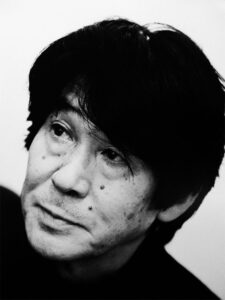
Daido Moriyama
Shared publisher: Getty Publications
15 photobook(s) in the library
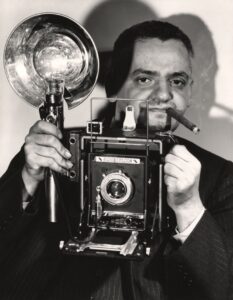
Weegee
Shared publisher: Getty Publications
14 photobook(s) in the library
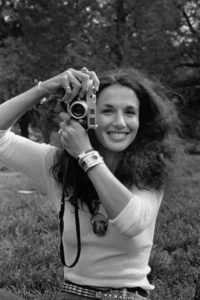
Mary Ellen Mark
Shared publisher: Getty Publications
10 photobook(s) in the library
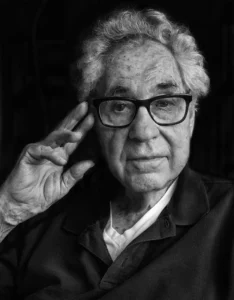
Elliott Erwitt
Shared publisher: W W Norton & Company Incorporated
8 photobook(s) in the library
COMMUNITY DISCUSSION
Discuss this entry
Share interpretations, reading notes, and source-aware questions. For catalog corrections, use the feedback form below.
No discussion yet. Start the first focused conversation.
Sign in to join the discussion.
Optionally receive a digest when related photobooks are added to the catalog.
See something incorrect? Sign in to suggest a correction or report an issue.