Photographer
Bruce Davidson
Bruce Davidson (born 1933) is an American photographer known for his deeply empathetic, long‑form documentary projects centered on community, civil rights, and urban life. Joining Magnum Photos in 1958 at the age of twenty‑five, he became one of the agency’s youngest full members. Davidson’s commitment to immersive storytelling led to influential bodies of work such as *Brooklyn Gang* (1959), a raw portrayal of teenage street culture; *The Dwarf* (1958), a character study of circus life; and *East 100th Street* (1970), a collaborative, years‑long portrait of residents in a Harlem neighborhood.
In the 1960s, Davidson produced some of the most important photographic documentation of the civil rights movement, following Freedom Riders, marches, and activists across the American South. His photographs from this period are essential records of U.S. social history. Later projects include *Subway* (1980), a vivid, color‑driven exploration of New York’s transit system, and *Time of Change*, which synthesizes years of reporting on social transformation in America. Davidson’s work blends humanist sensitivity, formal precision, and a commitment to capturing lived experience from within communities rather than as a distant observer.
His photographs are held in major collections including MoMA, the Metropolitan Museum of Art, the National Gallery of Art, and the Museum of Fine Arts, Boston. Recognized as a key figure in postwar American photography, Davidson continues to influence generations of documentary and street photographers through his ethical approach, immersive methodology, and enduring belief in photography’s ability to reveal dignity, resilience, and the complexity of everyday life.
This entry provides a chronological overview of Davidson’s life and career. It notes his birth in Oak Park, Illinois, in 1933, his studies at the Rochester Institute of Technology and Yale University, and his military service. The page traces his work as a freelance photographer for Life magazine and his membership in Magnum Photos, emphasizing his socially engaged documentary projects from the late 1950s onward, including the civil rights movement and series such as ‘East 100th Street.’ It also lists his major exhibitions and awards, framing him as a central figure in American documentary photography.


Selected Works & Key Projects
A source-backed introduction to individual photographs and significant bodies of work.
Key projects

Project · 1959
Brooklyn Gang
Davidson’s 1959 project follows the Jokers, a South Brooklyn teenage gang he sought out after reading about them in the New York Times. Rather than reducing its members to the period’s public anxieties about juvenile delinquency, the photographs register a close-knit group whose vulnerability coexists with carefully performed toughness. Clothing, cigarettes, tattoos, and poses become a visual language of resistance. This project merits selection as Davidson’s first major sustained essay and as a notably personal account of postwar youth culture, made through extended access to the group’s everyday lives.
View source ↗Project · 1967–1968
East 100th Street
East 100th Street is Davidson’s two-year photographic study of one East Harlem block, made in 1967 and 1968 with National Endowment for the Arts support. MoMA described its 1970 presentation as both a social document and a body of pictures formed through conscious collaboration with the people photographed, rather than candid extraction. The accompanying Harvard University Press book contained 123 photographs, and MoMA showed 43 prints. The project merits selection because its patient, respectful attention to specific residents rejects abstract treatment of poverty and racialized urban life.
View source ↗Project · 1980
Subway
Beginning in 1980, Davidson made Subway in New York’s underground system during a period marked by crime, graffiti, and disrepair. The National Gallery of Art notes that he understood the system as a place connecting disparate parts of the city and used color film in his personal work for the first time; its accompanying catalogue characterizes the subway as a metaphor for a wider world. Davidson photographed only in or directly from the system. The project merits selection for converting a public transit environment into a sustained color essay on urban proximity, fear, decay, and social diversity.
View source ↗Selected photographs
1959 · Brooklyn, New York, United States
Brooklyn Gang
This gelatin silver print is titled Brooklyn Gang and dates from 1959. The Metropolitan Museum identifies its setting as one of the Jokers’ gathering places: the gang leader dominates the foreground, close to the camera, blurred and cut by the frame, while other members sit behind him. Its deliberately rough framing aligns the picture’s form with the group’s resistant style. Selected from the larger project, it gives a concentrated account of Davidson’s method: he entered the group’s social space and made the camera’s proximity part of the portrait of teenage self-presentation.
Work source ↗1966 · East Harlem, New York, United States
East 100th Street
This 1966 gelatin silver print, inscribed “EAST 100TH. STREET 66,” shows a woman and child seated on a bed in a sparsely furnished interior. It is an important individual selection because it connects Davidson’s named East 100th Street subject to the project’s larger commitment to representing particular people in domestic space. The National Gallery of Art holds the signed print, acquired as a gift in 2015. Its close, frontal arrangement makes the household setting and the sitters’ direct presence central, rather than treating the neighborhood as an anonymous urban condition.
Work source ↗
1963 · Reflecting Pool, Washington, D.C., United States
March on Washington crowd at the Reflecting Pool
Made on August 28, 1963, this gelatin silver print records the crowd at the Reflecting Pool during the March on Washington for Jobs and Freedom. The Library of Congress identifies Davidson as photographer and included the work in its 2013–2014 exhibition commemorating the march’s fiftieth anniversary. This photograph merits selection from Davidson’s civil-rights work because its subject is a defining public demonstration rather than a private encounter. It places his documentary practice within the visual record of a major national mobilization for African American civil rights.
Work source ↗1980 · New York City Subway, New York, United States
Untitled, Subway
This Untitled, Subway is a 1980 dye imbibition print, printed in 2006, in the National Gallery of Art’s Subway group of 47 works. Its view of a platform uses a brightly lit strip, a central column marked by worn surface material, and a train in shadow. The photograph merits selection as a focused example of the project’s shift to color and its interest in the subway’s theatrical contrast of illumination and darkness. Rather than identifying an individual rider, it makes architecture, light, and the transit setting itself the photographic subject.
Work source ↗1966 · New Jersey, United States
Muskrat Trapper, New Jersey
Muskrat Trapper, New Jersey is a 1966 gelatin silver print in MoMA’s Photography collection. Its square format distinguishes it from Davidson’s better-known extended New York essays and shows the breadth of his subjects during the 1960s. The Museum lists it as a photograph by Davidson from 1960–1970 and records its 1969 accession. It merits inclusion as a named, place-specific work in a major museum collection: alongside his series-based portraits of urban communities, it demonstrates that Davidson also made concise documentary photographs rooted in a particular occupation and regional setting.
Work source ↗-
1954–1956
Education
Studies at Rochester Institute of Technology and Yale University
Davidson studied photography at the Rochester Institute of Technology and then at Yale University under Josef Albers and Herbert Matter, developing a rigorous visual language and a humanistic approach that would define his later documentary projects.
Source: Wikipedia Verified Sep 5, 2026
-
1958
Representation
Joins Magnum Photos
Davidson became a full member of Magnum Photos, the renowned cooperative agency, joining photographers like Henri Cartier-Bresson and Robert Capa and gaining access to international assignments and a network of influential colleagues.
Source: Magnum Photos Verified Sep 5, 2026
-
1959
Series
Photographs 'Brooklyn Gang'
For several months Davidson lived with a group of teenagers in the Brooklyn neighborhood of Coney Island, making intimate portraits that countered sensationalized media depictions of youth gangs and became a defining early series in his career.
Source: Wikipedia Verified Sep 5, 2026
-
1962
Award
Receives Guggenheim Fellowship
Davidson was awarded a Guggenheim Fellowship to support his documentation of the American civil rights movement, enabling him to travel through the South and capture images of protest and everyday life that would become part of a pivotal historical record.
Source: Wikipedia Verified Sep 5, 2026
-
1966–1968
Series
Photographs East 100th Street, Harlem
Over two years, Davidson made thousands of photographs of a single block within the Spanish Harlem neighborhood, producing a comprehensive and sympathetic portrait of urban life that became a landmark of social documentary photography.
Source: Wikipedia Verified Sep 5, 2026
-
1970
Exhibition
East 100th Street solo show at MoMA
Davidson's East 100th Street series was exhibited as a solo show at New York's Museum of Modern Art, introducing the work to a broad audience and consolidating his reputation as a major force in contemporary documentary photography.
Source: Wikipedia Verified Sep 5, 2026
-
1970
Photobook
Publishes 'East 100th Street' book
Harvard University Press released Davidson's monograph 'East 100th Street', collecting 100 gelatin silver prints from the project. The book was critically praised for its depth and humanism, becoming a foundational reference in visual sociology and street photography.
Source: Wikipedia Verified Sep 5, 2026
-
1980–1982
Series
Creates 'Subway' series
Davidson spent over two years riding the New York City subway system, using color film and available light to photograph passengers absorbed in their daily commute. The resulting series documents the city's diverse urban life during a period of turbulence and change.
Source: Wikipedia Verified Sep 5, 2026
-
1986
Photobook
Publishes 'Subway'
Davidson's book 'Subway' was published by Aperture, featuring his color photographs of New York's underground. The work was recognized for its bold use of color and candid approach, offering an unvarnished yet empathetic view of urban riders.
Source: Wikipedia Verified Sep 5, 2026
-
1992
Photobook
Publishes 'Central Park'
Davidson's project 'Central Park' (1992) captured the daily life of New Yorkers in the city's iconic park, from families and athletes to the homeless. The work expanded his landscape of American experience, emphasizing the park as a site of social and personal encounters.
Source: Wikipedia Verified Sep 5, 2026
Representation
Magnum Photos
Bruce Davidson has been a member of Magnum Photos since 1959, the international photographic cooperative that represents his documentary work and distributes it worldwide.
Verified 2026-09-05Wikipedia
Collection
Museum of Modern Art
The Museum of Modern Art in New York holds Bruce Davidson's photographs in its permanent collection, recognizing his contributions to postwar American documentary photography.
Verified 2026-09-05Wikipedia
Collection
Metropolitan Museum of Art
The Metropolitan Museum of Art holds Bruce Davidson's prints in its collection, a testament to his influence and historical importance in social documentary.
Verified 2026-09-05Wikipedia
Collection
Whitney Museum of American Art
The Whitney Museum of American Art includes Bruce Davidson's work in its permanent collection, underscoring his role as a major chronicler of American life.
Verified 2026-09-05Wikipedia
Collection
J. Paul Getty Museum
The J. Paul Getty Museum holds Bruce Davidson's photographs, reflecting his significance among photojournalists and documentary artists of the 20th century.
Verified 2026-09-05Wikipedia
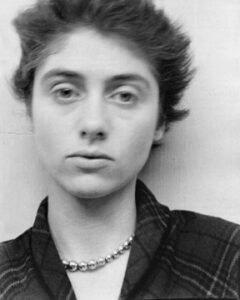
Shared exhibition
Diane Arbus
Bruce Davidson and Diane Arbus both featured in the 1967 'New Documents' exhibition at the Museum of Modern Art, curated by John Szarkowski, which celebrated a new approach to documentary photography.
Verified 2026-09-05Wikipedia
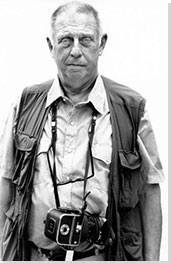
Shared exhibition
Lee Friedlander
Bruce Davidson and Lee Friedlander were both included in the 1967 'New Documents' show at MoMA, which presented their contrasting styles of social observation.
Verified 2026-09-05Wikipedia
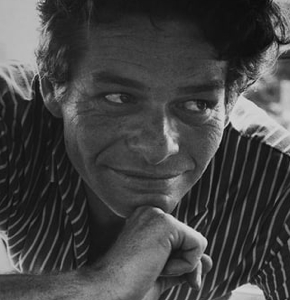
Shared exhibition
Garry Winogrand
Bruce Davidson and Garry Winogrand were both part of the 1967 'New Documents' exhibition at the Museum of Modern Art, a pivotal moment for modern street and documentary photography.
Verified 2026-09-05Wikipedia
Bruce Davidson’s Life and Work in Photography (opens a new site)
Aperture interview in which Davidson discusses continuing to photograph New York, revisiting and printing material from his archive, and his late-career interest in working digitally. It is a useful first-person resource on the sustained processes of editing, printing, and reassessing a long photographic practice.
“Photographing Eye-to-Eye”: A Conversation with Bruce Davidson (opens a new site)
A report on a public conversation between Davidson, Magnum Foundation executive director Kristen Lubben, and photo historian Carole Naggar. The account foregrounds Davidson’s emphasis on trust, compassion, and protecting people he photographs, while connecting those concerns to Brooklyn Gang, East 100th Street, Subway, and his civil-rights pictures.
Bruce Davidson on His Photographs of Los Angeles (opens a new site)
An interview centered on Davidson’s Los Angeles photographs and his return to the city decades after an earlier assignment. Davidson describes photographing urban nature, palm trees, mountains, and the reverse side of the Hollywood sign, as well as the technical and practical conditions of working with a 4×5 view camera.
2018 ICP Infinity Awards: Lifetime Achievement – Bruce Davidson (opens a new site)
A MediaStorm film made for Davidson’s 2018 ICP Infinity Award for Lifetime Achievement. The accompanying description identifies Brooklyn Gang, Time of Change, photographs of Jimmy the clown, and East 100th Street as key bodies of work, framing them as images that addressed both a photographic style and historical moments.
Bruce Davidson: A Lifetime with Leica (opens a new site)
A Leica Camera video profile presenting Davidson in his own words. Its description situates the film around his photographs of street gangs, circus performers, and the civil-rights struggles of the 1960s, making it a concise audiovisual introduction to the range of subjects associated with his career.
Video: Bruce Davidson on Street Photography (opens a new site)
The New Yorker presents an expanded excerpt focused on Davidson from Cheryl Dunn’s documentary Everybody Street, a film about New York street photography. The page identifies it as one of five exclusive expanded excerpts released in connection with the documentary, making it a focused video resource on Davidson within that New York photographic context.
COMMUNITY DISCUSSION
Discuss this entry
Share interpretations, reading notes, and source-aware questions. For catalog corrections, use the feedback form below.
No discussion yet. Start the first focused conversation.
Sign in to join the discussion.
Optionally receive a digest when related photobooks are added to the catalog.
See something incorrect? Sign in to suggest a correction or report an issue.