Photographer
Francesca Woodman
Francesca Woodman (1958–1981) was an American photographer whose intensely intimate, experimental, and psychologically charged images have made her one of the most influential figures in late 20th‑century photography. Working almost exclusively in black and white, and often using herself as the subject, she created photographs that explore identity, transformation, fragility, and the body’s relationship to space. Her images frequently feature blurred motion, long exposures, partial disappearance, and interactions with decaying interiors—gestures that evoke a haunting, surreal, and poetic atmosphere.
Born in Denver to the artists George and Betty Woodman, she grew up in a highly creative environment and spent extended periods in Italy, where European art and architecture profoundly shaped her aesthetic. Woodman began photographing at age thirteen and later attended the Rhode Island School of Design, studying in Providence and in Rome. During her short but prolific career she produced hundreds of photographs as well as artist books and mixed‑media works that combined performance, drawing, symbolism, and mythic references. Influenced by Surrealism, gothic literature, and alternative photographic practices, she used the camera as a tool to investigate presence and absence, selfhood, and the limits of representation.
After moving to New York in 1979 to pursue an artistic career, Woodman faced professional and personal challenges, and she died by suicide in 1981 at the age of twenty‑two. Her work was championed posthumously and is now recognized as a landmark contribution to contemporary art, frequently discussed within feminist theory, photographic experimentation, and performance-based self‑portraiture. Woodman’s photographs have been the subject of major exhibitions around the world and continue to resonate for their emotional intensity, formal innovation, and profound sense of mystery.
Francesca Woodman (1958–1981) was an American photographer known for her black-and-white self-portraits and intimate, often spatial experiments. Born in Denver, she studied at the Rhode Island School of Design and later worked in Italy and New York. Her photographs frequently featured her own body in various states of blurring, merging with walls, or confronting the camera. Despite a suicide at age 22, her work gained posthumous recognition for its surreal, feminist, and conceptual qualities, influencing later generations of artists. Wikipedia emphasizes her early engagement with the body and space, as well as the limited number of works produced during her short career.


Selected Works & Key Projects
A source-backed introduction to individual photographs and significant bodies of work.
Key projects

Project · 1975–1978
House series
Made in an abandoned Providence house, the House series is an extended investigation of the body’s uneasy relation to domestic architecture. Woodman altered the setting by positioning doors and mantelpieces at unstable angles, then photographed herself—nude or in vintage dress—moving through the deteriorated rooms until body and building appear to merge. The series merits selection because it crystallizes the serial method Woodman developed at RISD: returning to a site and subject through variations rather than making isolated images. It also makes architectural space an active participant in her self-portraiture.
View source ↗
Project · 1980
Temple project
The Temple project brought Woodman’s experiments with diazotype—the process commonly used for architectural blueprints—to a monumental multipart format. It assembled blueprint units containing architectural fragments and larger-than-life caryatid-like figures to suggest the façade of an ancient Greek temple. Related works combined earlier photographs with historical imagery that Woodman rephotographed from books. The project merits selection because it marks a major change from intimate, inward-looking pictures toward large-scale collage and an artist’s role as producer and constructor. Blueprint for a Temple (I), made from twenty-nine photographs, records this expanded ambition in a surviving work.
View source ↗Selected photographs

1975
Polka Dots
Polka Dots is a small gelatin silver print in MoMA’s collection, dated 1975–76. Its image places a blurred figure before a worn, peeling wall, bringing together a patterned dress, bodily motion, and a decayed interior. It merits selection as a compact, collection-held example of Woodman’s early photographic vocabulary: the female figure is neither a stable portrait subject nor simply part of the setting, but is made visually contingent through blur and texture. The work is especially useful for understanding how modest print scale could heighten the intimacy and uncertainty central to her photographs.
Work source ↗1975 · Providence, Rhode Island, United States
House #3
House #3 presents a blurred figure in a decrepit interior, where chipped walls, debris, and a window remain sharply rendered while the photographer’s body seems to merge with or emerge from the wall. Made in an abandoned Providence house, it turns a staged self-portrait into an encounter with the emotional force of space. The photograph merits selection because it gives unusually clear form to a central Woodman strategy: long exposure and movement dissolve bodily boundaries while architecture remains insistently present. The National Gallery of Art identifies it as part of the House series and as a dreamlike performance addressing self-portraiture, the female body, and architectural space.
Work source ↗
1975 · Providence, Rhode Island, United States
Self-portrait talking to vince
Self-portrait talking to vince is a gelatin silver print in which Woodman sits in a corner facing the camera, with a sinuous element extending from her open mouth like a provisional speech bubble. The title directs attention to speech, but the image replaces clear verbal exchange with staged physical ambiguity. It merits selection because it concentrates elements repeatedly associated with Woodman’s practice: the self as photographic subject, an unsettling interior, and a carefully arranged action that hovers between fantasy and reality. Its subsequent presentation as the focal work of a SCAD Museum exhibition on her legacy also documents its usefulness for addressing her influence on later photographers.
Work source ↗
1977 · Providence, Rhode Island, United States
On Being an Angel #1
On Being an Angel #1 belongs to Woodman’s angel studies, a group through which she tested photography’s relation to time and visible reality. In these works, motion-blurred figures—described by Woodman as “ghost pictures”—connect a gothic sensibility with historical spirit photography, which claimed to make life after death photographically visible. This photograph merits selection because it makes the technical device of blur conceptually central: the body is recorded as a changing trace rather than a fixed identity. The named work was included among the images of Moderna Museet’s major Woodman exhibition, whose account emphasizes the broad international influence of her photographs.
Work source ↗-
1975–1979
Education
Education at Rhode Island School of Design
Francesca Woodman studied at the Rhode Island School of Design (RISD) from 1975 to 1979. During this period she developed her distinctive photographic vocabulary, characterized by performance of the body in interiors, use of long exposures, and explorations of gender and identity. Her education laid the foundation for her influential body of work that emerged shortly after.
Source: Wikipedia Verified Sep 4, 2026
-
1977–1978
Education
Study at RISD European Honors Program in Rome
Woodman studied at RISD's European Honors Program in Rome in 1977–1978. This year-long stay was pivotal, as she produced many works featuring her own body in decaying interiors, and created her famous 'Eel Series' and 'House Series', exploring presence, absence, and time.
Source: Wikipedia Verified Sep 4, 2026
-
1979
Career milestone
Moved to New York City
After graduating from RISD, Woodman moved to New York City in 1979 to pursue her artistic career. In the vibrant downtown art scene, she continued photographing herself in transient spaces, further developing her signature aesthetic of the body merging with architecture.
Source: Wikipedia Verified Sep 4, 2026
-
1980
Exhibition
First solo exhibition at Daniel Wolf Gallery
In 1980, Woodman presented her first solo exhibition at the Daniel Wolf Gallery in New York. The show highlighted her innovative photographs that merged performance, portraiture, and architectural space, earning early critical recognition before her career was cut short.
Source: Wikipedia Verified Sep 4, 2026
-
1981
Career milestone
Death at age 22
Francesca Woodman died by suicide on January 19, 1981, at the age of 22. Her death cut short a promising career and elevated her mythic status, but her extensive body of work from her short life continues to influence contemporary art and photography.
Source: Wikipedia Verified Sep 4, 2026
-
2011–2012
Exhibition
Major retrospective at SFMOMA and Guggenheim
A retrospective of Woodman's work was held at the San Francisco Museum of Modern Art in 2011, then traveled to the Solomon R. Guggenheim Museum in New York in 2012. This exhibition brought her photographs to international attention, cementing her posthumous reputation as a pioneer of performance-based photography.
Source: Wikipedia Verified Sep 4, 2026
Museum relationship
Museum of Modern Art
The Museum of Modern Art in New York holds a significant group of Francesca Woodman's gelatin silver prints, created between 1975 and 1980. These works, including her self-portraits that merge the body with interior architectural spaces, exemplify her exploration of identity, gender, and spatial absence. MoMA has exhibited these photographs in thematic surveys of feminist and postmodern photography, underscoring their critical role in the reevaluation of the medium during the late twentieth century. The collection allows for sustained scholarly and public engagement with Woodman's formally inventive and psychologically charged imagery.
Verified 2026-09-04Wikipedia
Museum relationship
The Metropolitan Museum of Art
The Metropolitan Museum of Art's collection includes several of Woodman's early silver prints, notably her 1977–1979 series that uses dilapidated interior rooms as stages for fragmented bodies. These works, featuring double exposures and movement blur, were acquired as part of the museum's holdings that contextualize the rise of self-portraiture and feminist art in American photography. Exhibition loans from this collection have helped position Woodman within broader discussions of surrealist legacy and the photography of the body, making the Met a key institutional presence for her oeuvre.
Verified 2026-09-04Wikipedia
Museum relationship
Tate Modern
Tate Modern holds a selection of Woodman's photographs, including her iconic 1980 'New York' self-portraits where the artist appears as a ghostly presence against textured walls and mirrors. These works are recognized for bridging performance art and still photography, and they are frequently lent to major retrospectives. Tate's acquisition and display of Woodman contribute to the international canonization of her practice, situating her feminist strategies alongside peers such as Cindy Sherman within the museum's contemporary collection.
Verified 2026-09-04Wikipedia
Influence & affinity
Aaron Siskind
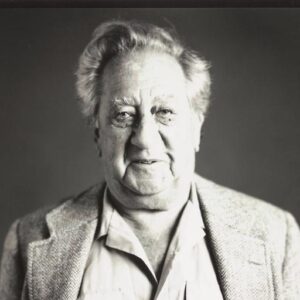
Francesca Woodman studied under Aaron Siskind at the Rhode Island School of Design, where she completed her Bachelor of Fine Arts in 1979. Siskind, an influential Abstract Expressionist photographer, offered critiques that emphasized formal abstraction and the emotional resonance of surface textures—elements that appear in Woodman's own décors and fragmented bodies. While Woodman developed a distinct visual language, Siskind's mentorship is documented as a formative influence during her undergraduate years, providing a direct link to the postwar American photography scene.
Verified 2026-09-04Wikipedia
Francesca Woodman (opens a new site)
This Guggenheim exhibition page frames the 2012 survey as an opportunity to reconsider Woodman’s work and its reception within 1970s American photography and video. It identifies her sustained concerns with the body in space, self-portraiture, female subjectivity, seriality, Conceptualist practice, literature, and performance. The account also specifies that the presentation included more than 120 vintage photographs, artist’s books, late blueprint studies, and six short videos.
Francesca Woodman (opens a new site)
Moderna Museet’s artist overview traces Woodman’s formative work in Providence, Rome, the MacDowell Colony, and New York. It documents her use of photography, artist’s books, diazotypes, colour images, and video, and records key exhibitions and biographical milestones. The page is particularly useful as a concise institutional chronology that situates her photographs within the places and media in which she worked.
Francesca Woodman (opens a new site)
SFMOMA’s record for its 2011–2012 retrospective describes Woodman’s photographs as continuing to engage audiences through their ambiguities and their investigations of self-portraiture and the body in architectural space. It presents the exhibition as the first major United States retrospective in more than two decades and notes that photographs, artist’s books, and videos together addressed femininity, female subjectivity, and photography itself.
Through the Lens of Francesca Woodman (Part 2 of 2) (opens a new site)
The second Guggenheim symposium video continues the 2012 discussion of Woodman through the intersections of photography, moving image, performance, and feminist practice in the 1970s. Its listed segments include William Kaizen on Woodman in the context of early video art, Moyra Davey’s memoir on Woodman’s work, and a group conversation with audience questions. It is especially useful for viewers seeking focused discussion of Woodman’s relation to early video.
Through the Lens of Francesca Woodman (Part 1 of 2) (opens a new site)
Published by the Guggenheim Museum in connection with its 2012 Woodman exhibition, this symposium recording examines still and moving images in her work and in 1970s artistic production. Its program addresses Post-Minimalism, performance, video, time and space, and feminist practice. The listed speakers include George Baker, Jane Blocker, and Joan Jonas in conversation with Jennifer Blessing, making the video a substantial scholarly resource for historical context.
The Agony and the Ecstasy of Francesca Woodman (opens a new site)
This 89-second PBS preview introduces the Independent Lens documentary The Woodmans through Francesca Woodman’s place in a family of artists. It states that recognition of her work came after her death and presents the film’s family-centered account of art-making, loss, and legacy. It is a short, accessible audiovisual introduction rather than a survey of individual photographs.
COMMUNITY DISCUSSION
Discuss this entry
Share interpretations, reading notes, and source-aware questions. For catalog corrections, use the feedback form below.
No discussion yet. Start the first focused conversation.
Sign in to join the discussion.
Optionally receive a digest when related photobooks are added to the catalog.
See something incorrect? Sign in to suggest a correction or report an issue.