Photographer
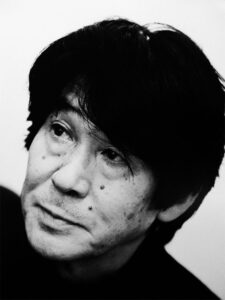
William Klein
William Klein (1928–2022) was an American photographer, painter, graphic designer, and filmmaker whose career developed largely in Europe. Trained first as a painter and associated with the teaching of Fernand Léger, he approached photography without deference to its established standards of technical finish. His position between postwar New York and Paris helped him see the modern city as both participant and outsider: a place of spectacle, aggression, social friction, and improvised performance.
Klein’s street photographs are marked by proximity, wide-angle distortion, grain, blur, high contrast, and crowded frames. Rather than remaining an inconspicuous observer, he often acknowledged or provoked the people before his camera. Children posture, pedestrians collide visually with signs, and faces press toward the lens. What conventionally counted as an error became part of his vocabulary. This confrontational method differed from the quieter lyricism associated with much humanist photography and challenged the idea that documentary authority depended upon neutrality. His fashion work was similarly disruptive: during his period with Vogue, which continued until 1965, he brought models into streets and treated the assignment as an opportunity for movement, graphic experiment, and urban theater.
His foundational book, Life is Good & Good for You in New York: Trance Witness Revels, published in 1956, transformed photographs of his native city into a deliberately unstable visual narrative. Its dense layouts and abrasive images conveyed New York less as an orderly record than as a collision of mass media, crowds, and private gestures. Rome (1959) extended this subjective city-book form while responding to a different street culture. The later Moscow and Tokyo books, issued in 1964, demonstrated that Klein’s method was not simply a New York mannerism: each city generated its own rhythms, political signs, public ceremonies, and forms of self-presentation.
Klein moved among painting, photography, graphic design, fashion, and film rather than treating them as separate professional identities. This mobility placed him outside a single school, but his acceptance of roughness and direct encounter became important to later street photography and to photographers seeking alternatives to polished editorial convention. Institutional exhibitions, including a presentation at C/O Berlin, and sustained critical attention have reinforced the historical standing of both his individual images and his books. His filmmaking also continued the skepticism toward spectacle and representation already present in his still photography.
Photobook collectors should approach Klein through the city books, beginning with New York and then comparing Rome, Moscow, and Tokyo. Their importance lies not only in recognizable photographs but in sequencing, scale changes, juxtapositions, typography, and the conversion of urban noise into page rhythm. Different publications can mediate that energy through their printing and design, so the book should be read as an authored object rather than merely a container for famous images. The tension between raw-looking photographs and highly controlled graphic construction is central to Klein’s achievement—and to understanding why his work remains consequential.
〔PBL-BIO/2〕


-
By 1948
Education
Studies in Paris
By 1948, Klein was in Paris, studying at the Sorbonne and working briefly in Fernand Léger’s studio.
Source: International Center of Photography Verified Aug 31, 2026
-
1954
Series
New York Photographic Diary
During a 1954 stay in New York, Klein began a photographic diary using wide-angle views, pronounced grain, strong contrast, unconventional framing, and varied shooting distances.
Source: Official William Klein website Verified Aug 31, 2026
-
1956
Photobook
Life Is Good & Good for You in New York: Trance Witness Revels
Klein’s first New York photobook was published in 1956. He created its photographs, sequencing, layouts, captions, and jacket design.
Source: Aperture Verified Aug 31, 2026
-
1957
Award
Prix Nadar for New York
Gens d’images records William Klein and his book New York, published by Seuil, as the recipients of the 1957 Prix Nadar.
Source: Gens d’images Verified Aug 31, 2026
-
1959
Photobook
William Klein: Rome
First published in 1959, Rome developed from photographs Klein made after traveling to Italy in 1956 to assist Federico Fellini. The book combined city photographs with extended captions and other texts.
Source: Aperture Verified Aug 31, 2026
-
1980–1981
Exhibition
William Klein
The Museum of Modern Art presented this exhibition from October 23, 1980, through January 1, 1981, focusing on Klein’s photographic work.
Source: The Museum of Modern Art Verified Aug 31, 2026
-
1989
Collection acquisition
The Met Acquires New York
The Metropolitan Museum of Art acquired Klein’s 1954 gelatin-silver photograph New York in 1989 through the Joyce and Robert Menschel Gift purchase fund.
Source: The Metropolitan Museum of Art Verified Aug 31, 2026
-
1990
Award
Hasselblad Award
Klein received the 1990 Hasselblad Award at a ceremony in Gothenburg on October 3. An exhibition of his photographs opened at the Hasselblad Center in conjunction with the presentation.
Source: Hasselblad Foundation Verified Aug 31, 2026
-
1999
Award
RPS Centenary Medal and Honorary Fellowship
The Royal Photographic Society named Klein the 1999 recipient of its Centenary Medal, an award accompanied by an Honorary Fellowship.
Source: Royal Photographic Society Verified Aug 31, 2026
-
2005–2006
Exhibition
William Klein
Centre Pompidou presented this retrospective in Paris from December 7, 2005, to February 20, 2006. It brought together photographs, book layouts, film excerpts, paintings, drawings, and posters from Klein’s archive.
Source: Centre Pompidou Verified Aug 31, 2026
-
2007
Award
Infinity Award for Lifetime Achievement
The International Center of Photography honored Klein with its 2007 Infinity Award for Lifetime Achievement; the recipient record is dated April 11, 2007.
Source: International Center of Photography Verified Aug 31, 2026
-
2022
Exhibition
William Klein: YES; Photographs, Paintings, Films, 1948–2013
ICP presented the retrospective from June 3 through September 15, 2022. Filling the museum, it featured more than 200 photographs, paintings, films, photobooks, and other works spanning six decades.
Source: International Center of Photography Verified Aug 31, 2026
Collection
The Museum of Modern Art (MoMA)
MoMA’s artist catalogue lists 57 works by William Klein online.
Verified 2026-08-31MoMA — William Klein
Collection
The Metropolitan Museum of Art
The Met collection records Klein’s 1954 photograph New York under accession number 1989.1038.2.
Verified 2026-08-31The Met — William Klein, New York
Collection
National Gallery of Art
The National Gallery of Art’s artist catalogue lists 25 works by William Klein, including photographs with accession records.
Verified 2026-08-31National Gallery of Art — William Klein
Collection
San Francisco Museum of Modern Art (SFMOMA)
SFMOMA’s artist page identifies multiple William Klein photographs as works in its collection.
Verified 2026-08-31SFMOMA — William Klein
Collection
J. Paul Getty Museum
The museum’s collection catalogue includes an authority page for William Klein.
Verified 2026-08-31The J. Paul Getty Museum Collection — William Klein
Collection
Whitney Museum of American Art
The Whitney records its first acquisition of Klein’s work in 1991 and lists ten works in the collection.
Verified 2026-08-31Whitney Museum — William Klein
Collection
Centre Pompidou
Centre Pompidou’s catalogue identifies 60 works by William Klein: 59 photographs and one film.
Verified 2026-08-31Centre Pompidou — William Klein
Archive
International Center of Photography
ICP’s William Klein archive page lists seven archived items, including works from its collection.
Verified 2026-08-31International Center of Photography Archive — William Klein
Gallery relationship
Howard Greenberg Gallery
Howard Greenberg Gallery maintains a dedicated William Klein page presenting his work and exhibitions held by the gallery.
Verified 2026-08-31Howard Greenberg Gallery — William Klein
Gallery relationship
Polka Galerie
Polka Galerie’s William Klein page presents multiple bodies of work and documents exhibitions held at the gallery.
Verified 2026-08-31Polka Galerie — William Klein
Publishing relationship
Thames & Hudson
Thames & Hudson published William Klein: Yes, a retrospective whose content selection and book design were directed by Klein.
Verified 2026-08-31Thames & Hudson — William Klein: Yes
William Klein – All the World’s a Stage (opens a new site)
This large-scale MAAT exhibition brought together roughly two hundred works spanning street and fashion photography, cinema, painting, and editorial production. Curator David Campany organized the material around performance, presenting Klein’s career as a continuous negotiation between commercial culture, avant-garde experiment, and artistic independence.
William Klein Retrospective: Films, Etc. (opens a new site)
Organized for the centenary of Klein’s birth, this MEP retrospective foregrounds his extensive filmmaking alongside photographs, graphic works, publications, and archival material. Its screening program combines well-known features and documentaries with rarely presented films, emphasizing the continuity of Klein’s challenges to artistic and political convention.
William Klein: Yes (opens a new site)
Completed under Klein’s direction, this large-format retrospective surveys his work across photography, filmmaking, painting, book design, and graphic design. David Campany’s chronological text accompanies a career-spanning selection intended to show the visual and conceptual links between Klein’s many disciplines.
William Klein: YES at the International Center of Photography Celebrates Multifaceted Career of a Visionary Artist (opens a new site)
ICP’s announcement introduces a major retrospective of nearly three hundred works covering Klein’s painting, graphic design, photography, books, and films from 1948 to 2013. Curated by David Campany, the exhibition argues for understanding these activities as interconnected parts of one expansive and deliberately unspecialized practice.
William Klein Dreams in Black and White (opens a new site)
Aaron Schuman’s wide-ranging interview follows Klein from his early abstract experiments and landmark city books to fashion assignments and filmmaking. Klein’s anecdotes reveal a restless, humorous artist who repeatedly moved between media while preserving a direct and kinetic approach to images.
William Klein: 'I was an outsider, following my instincts' (opens a new site)
Sean O’Hagan’s interview presents Klein as a self-taught outsider whose disregard for polished technique shaped his radical street photography, photobooks, fashion work, and films. Klein reflects candidly on New York, his creative independence, and the instinctive experimentation that sustained his career.
William Klein and Photographism (opens a new site)
This short video revisits Klein’s lesser-known abstract photography and its close relationship to painting and graphic design, including his early record-cover work. Commentary by curators Julie Jones and Karolina Ziebinska-Lewandowska places these experiments within a broader dialogue between photography and the graphic arts.
Contacts – William Klein (opens a new site)
This episode examines Klein’s rule-breaking practice across painting, graphic art, fashion photography, and film. It emphasizes the camera’s confrontational role in his work and the physical energy through which he transformed encounters into images.
William Klein’s Unclichéd New York (opens a new site)
This short documentary considers how Klein’s 1950s photographs rejected triumphant images of New York in favor of a crowded, abrasive street-level city. It frames his work as the product of both fascination and estrangement, with close physical engagement replacing the conventional skyline view.
In Conversation: William Klein (opens a new site)
In this public conversation with writer and curator David Campany, Klein discusses a practice spanning photography and cinema. The exchange ranges from his formative contact with Fernand Léger to feature films, documentary work, and his encounters with Muhammad Ali.
COMMUNITY DISCUSSION
Discuss this entry
Share interpretations, reading notes, and source-aware questions. For catalog corrections, use the feedback form below.
No discussion yet. Start the first focused conversation.
Sign in to join the discussion.
Optionally receive a digest when related photobooks are added to the catalog.
See something incorrect? Sign in to suggest a correction or report an issue.