Photographer
Lewis Baltz
Lewis Baltz was an American visual artist, photographer, and educator who redefined landscape photography in the late twentieth century. Born in Newport Beach, California, in 1945, he received a BFA from the San Francisco Art Institute in 1969. He became a central figure of the New Topographics group, which turned away from sublime nature views to examine the banal, often degraded spaces produced by industrial development and suburban sprawl. He died in Paris in 2014, where he had lived for decades.
Baltz developed a deliberately neutral and clinical style. His images are typically small, black-and-white, and frontal, showing tract houses, industrial parks, roads, fences, and construction debris under even lighting and without people. The compositions reject pictorial drama, mirroring the serial logic of Minimal art. Rather than moralize, Baltz presents these sites as documents of an economic system that quietly erases the natural world. His method differs sharply from peers who often sought a poetic in the landscape; Baltz stays closer to the procedural coldness of an inspection record.
Major bodies of work include his earliest series on industrial parks in California, which captured the anonymous architecture of business speculation; the extended study of Candlestick Point in San Francisco, a marginal and polluted site transformed by landfilling; and later undertakings such as Sites of Technology, which explored factories and high-tech facilities across Europe and the United States. These projects were produced as carefully sequenced groups of images, and his photobooks function as essential parts of the work, not mere catalogues.
Baltz’s significance lies in his alignment with Conceptual photography and his influence on how institutions present the medium. A Guggenheim Fellowship supported him, and his photographs entered the collections of major museums such as the Guggenheim and Whitney. He also taught widely and relocated to Paris, connecting American photographic concerns with European art discourse. Some critics have argued that his cool aesthetic risked turning critique into style; Baltz’s later work, often more abstract and digitally inflected, acknowledged this tension.
For collectors of photobooks, Baltz offers an unusually coherent body of printed work. Projects such as Rule Without Exception show how his sequence-based thinking transfers to book form. The design, printing, and pacing in these volumes are integral to meaning. A practical entry point is a mid-career survey edition, while advanced collectors may seek the harder-to-find early artist’s books. Above all, his books teach us to see landscape not as a scene but as a score for economic power.
〔PBL-BIO/2〕
Lewis Baltz (1945–2014) was an American photographer known for his conceptual and minimalist depictions of suburban and industrial landscapes. Born in Newport Beach, California, he studied at the San Francisco Art Institute and later at Claremont Graduate School. Baltz emerged in the 1970s as a leading figure of the New Topographics movement, which treated the built environment with an objective, deadpan aesthetic. His work often focused on tract housing, office parks, and other banal structures, challenging traditional landscape photography. He published numerous books and exhibited internationally, with retrospectives at significant museums. His influence extends to conceptual photography and the examination of space and power.

Selected Works & Key Projects
A source-backed introduction to individual photographs and significant bodies of work.
Key projects

Project · 1971
The Tract House
The Tract House (1971) is a group of 14 black-and-white photographs that examine the stark monotony of suburban housing developments in Southern California. Baltz's frontal, unemotional camera style strips architectural photography of any heroics, instead presenting the houses as repetitive products of industrial construction and land speculation. The series is a key early statement of the New Topographics movement, which redefined landscape photography as a critical evaluation of the built environment, influencing later generations of documentary and conceptual photographers.
View source ↗Selected photographs
1971 · Irvine, California, USA
Untitled (Housing Tract, California)
This photograph from The Tract House series shows a single-storey suburban house with a stark blank facade, the front yard gravelly and minimal. Baltz used a small-format camera to achieve an even, neutral light and sharp detail, rendering the building as an object of rational scrutiny. The image is famous for its challenge to traditional landscape aesthetics: instead of majestic nature, it presents a banal structure devoid of human presence, yet implies systemic social critique. It remains a central example of the New Topographics style.
Work source ↗1971 · Irvine, California, USA
Untitled (from The Tract House series)
Another work from the same series often reproduced, this photograph features multiple nearly identical houses in a row, emphasizing modular repetition and loss of individuality. Baltz's cool, descriptive approach makes the image a biting commentary on mass housing and land speculation. The specific framing and exposure also showcase his technical control—fine grain and wide tonal range—that became a hallmark of his practice. This image has been widely exhibited and discussed as emblematic of the '70s shift in American photography toward conceptual and critical realism.
Work source ↗
1980 · Utah, USA
Untitled, from Park City
This large-format photograph from Park City shows a partially built wooden frame against an arid hillside, with mountains in the distance. Baltz's crisp detail and wide tonal range make the construction seem both temporary and intrusive. The work is significant for its monumental scale and technical rigour, and it questions the relationship between economic development and pristine landscapes. It has been praised for its coolly dispassionate view, a departure from the more emotional landscape photography of the previous decade, and is a touchstone of the industrial landscape subgenre.
Work source ↗1989 · San Francisco, California, USA
Untitled, from Candlestick Point
Shown here is an image of a barren windswept lot with a chain-link fence cutting across the horizon, the ground littered with debris. Baltz's use of high-key exposure and minimal composition turns starkness into a formalist exercise, yet it carries a social condemnation. The series is regarded as a late-career triumph, influencing photographers such as Andreas Gursky and Thomas Ruff. This particular photograph is often exhibited as an example of how Baltz used 'deadpan' aesthetics to expose environmental politics.
Work source ↗1977 · Nevada, USA
Untitled (Near Reno)
This early medium-format photograph depicts a scatter of temporary homes and sheds in a dry Nevada desert, shot from an elevated viewpoint. Baltz noted the impact of sprawling development on fragile landscapes, establishing his signature analytical distance. The photograph is significant because it anticipates his later, more systematic series, yet already carries the 'institutional' gaze he refined. It has been collected by major institutions and appears in histories of the New Topographics as a bridge between his suburban studies and western empty-land work.
Work source ↗-
1969
Education
Bachelor of Fine Arts from San Francisco Art Institute
Baltz completed his undergraduate studies at the San Francisco Art Institute, where he developed a rigorous formal approach to photography. This period marked the beginning of his engagement with the built environment, setting the foundation for his later critical examinations of industrial and suburban landscapes.
Source: Wikipedia Verified Sep 6, 2026
-
1971
Education
Master of Fine Arts from Claremont Graduate School
Baltz earned an MFA from Claremont Graduate School, refining his conceptual and serial approach to photography. His graduate work anticipated the deadpan, detached style that would become central to the New Topographics movement, emphasizing the ordinary and often overlooked transforming American terrain.
Source: Wikipedia Verified Sep 6, 2026
-
1974
Series
The New Industrial Parks Near Irvine, California
This landmark photographic series depicts unpopulated industrial parks in Southern California, characterized by blank facades and utilitarian architecture. Baltz employed a rigorously systematic, grid-like format and high-contrast printing to present these sites as forensic records. The work is widely recognized as a foundational statement of the New Topographics aesthetic, redirecting landscape photography from the sublime toward the banal.
Source: Wikipedia Verified Sep 6, 2026
-
1975
Exhibition
New Topographics: Photographs of a Man-Altered Landscape
Baltz was one of ten photographers included in this pivotal exhibition at the George Eastman House in Rochester. The show contrasted his sparse industrial scenes with traditional landscape photography, asserting a cool, documentary approach. The exhibition later became a touchstone for redefining landscape photography's subject matter, establishing Baltz as a leader in the movement.
Source: Wikipedia Verified Sep 6, 2026
-
1978
Award
John Simon Guggenheim Memorial Foundation Fellowship
Baltz received a Guggenheim Fellowship, acknowledging his substantial contributions to American photography. This recognition enabled him to pursue new bodies of work with greater autonomy, including later investigations of urban and peripheral landscapes. The award underscores his standing among contemporary photographers during the late 1970s.
Source: Wikipedia Verified Sep 6, 2026
-
1979–1980
Series
Park City
This project documents the construction of Park City, Utah, during a period of rapid suburban development. Baltz extended his minimalist aesthetic to the built environment, producing images of half-finished houses and cleared lots that suggest the erasure of natural terrain. The series is significant for its sustained critique of the American West's commodification, furthering his reputation as a chronicler of environmental transformation.
Source: Wikipedia Verified Sep 6, 2026
-
1987
Series
Candlestick Point
Baltz turned his attention to a former landfill site in San Francisco, creating a series of stark black-and-white photographs that expose the degraded spatial reality of the location. The work is framed as an environmental study, yet its detached aesthetic compels viewers to confront the often invisible consequences of urban development. This series solidified his approach of treating landscape as a social indictment rather than a passive view.
Source: Wikipedia Verified Sep 6, 2026
Collection
Museum of Modern Art (MoMA)
MoMA holds works by Lewis Baltz in its permanent collection, including prints from his early series such as 'The Prototype Works' and 'Park City'. The acquisition reflects his significance in the New Topographics movement and institutional recognition of his conceptual approach to landscape photography.
Verified 2026-09-06MoMA Collection
Collection
J. Paul Getty Museum
The Getty Museum holds a significant collection of Lewis Baltz's photographs, including vintage prints from his major series. His work is part of the museum's focus on 20th-century American photography, highlighting his role in redefining documentary landscape photography.
Verified 2026-09-06Getty Museum
Representation
Galerie Thomas Zander
Galerie Thomas Zander in Cologne represents the estate of Lewis Baltz and has organized exhibitions of his work. The gallery's representation ensures continued access to and scholarly presentation of his photographs.
Verified 2026-09-06Galerie Thomas Zander
Archive
Center for Creative Photography, University of Arizona
The Center for Creative Photography houses the Lewis Baltz Archive, including negatives, contact sheets, and personal papers. This archive is a primary resource for scholars researching his working methods and artistic development.
Verified 2026-09-06Center for Creative Photography
Museum relationship
San Francisco Museum of Modern Art (SFMOMA)
SFMOMA has exhibited and collected Lewis Baltz's photographs, particularly from his time teaching in the Bay Area. His work is represented in their permanent collection, reflecting his regional importance and broader influence.
Verified 2026-09-06SFMOMA Collection
Publishing relationship
Steidl
Steidl published major monographs and catalogues of Lewis Baltz's work, including 'The Prototype Works' and 'Park City' reissues. Steidl's high-quality editions have been essential in disseminating his photographs to a wide audience.
Verified 2026-09-06Steidl Publisher
Other institution
National Gallery of Art, Washington D.C.
The National Gallery of Art holds prints by Lewis Baltz in its collection, acquired to represent the evolution of contemporary landscape photography. This institutional acquisition underscores his canonical status in American photographic history.
Verified 2026-09-06National Gallery of Art Collection

Other relationship
Gerry Badger
British Journal of Photography described Badger as Baltz’s close friend in its publication of Badger’s tribute following Baltz’s death.
Verified 2026-09-031854 Photography / British Journal of Photography
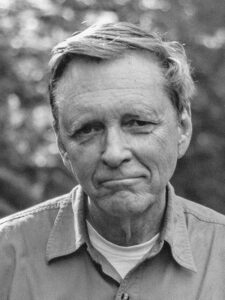
Shared movement
Robert Adams
Lewis Baltz and Robert Adams were both central figures in the New Topographics movement of the 1970s, which redefined landscape photography by depicting human-altered environments with a detached, documentary style. Their parallel work was showcased in the landmark 1975 exhibition 'New Topographics'.
Verified 2026-09-06Wikipedia – New Topographics
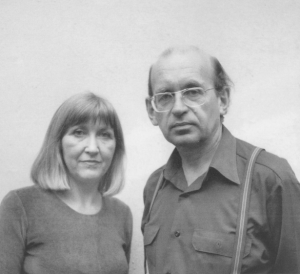
Influence & affinity
Bernd and Hilla Becher
Lewis Baltz was influenced by the Bechers' typological approach to photographing industrial structures, though he diverged into more conceptual and minimal territory. His work shares a detached, systematic discipline with the Becher school, despite his independent development.
Verified 2026-09-06Tate Essay on New Topographics
Lewis Baltz | International Center of Photography (opens a new site)
This archival record from the International Center of Photography (ICP) presents a factual biography of Lewis Baltz, reviewing his education, major exhibitions, and affiliations. It notes his birth in Newport Beach, California, and his studies at the San Francisco Art Institute, as well as his immersion in the New Topographics movement. The page also documents his awards, including the Guggenheim Fellowship, and his later exploration of digital media. As an institution dedicated to photography, ICP’s biographical entry offers reliable data for researchers and confirms Baltz’s lasting presence in photographic history.
Lewis Baltz (opens a new site)
This comprehensive encyclopedia entry details the life and work of Lewis Baltz (1945–2014), an American photographer central to the New Topographics movement. It covers his early minimalist series such as 'The New Industrial Parks near Irvine, California' (1974), his turn to color and digital media in later projects like 'The Tract Houses' and 'Park City', and his international exhibitions. The page situates Baltz within a critique of the built environment, emphasizing his cool, analytical style that recast landscape photography. It also notes his teaching and reception, making it a reliable introductory source for understanding his significance in post-war photography.
COMMUNITY DISCUSSION
Discuss this entry
Share interpretations, reading notes, and source-aware questions. For catalog corrections, use the feedback form below.
No discussion yet. Start the first focused conversation.
Sign in to join the discussion.
Optionally receive a digest when related photobooks are added to the catalog.
See something incorrect? Sign in to suggest a correction or report an issue.