Photographer
Paul Strand
Paul Strand (1890–1976) was an American photographer and filmmaker whose career spanned nearly the entire twentieth century, establishing him as a central figure in modernist photography. Born and raised in New York City, he first encountered the medium as a teenager at the Ethical Culture School under the guidance of documentary photographer Lewis Hine, who not only taught technique but also instilled a social conscience. Strand later became part of Alfred Stieglitz’s circle, exhibiting at the legendary 291 gallery, and his early experiments with abstraction and sharp-focus realism helped redefine what photography could express.
Strand’s visual language is characterized by extraordinary clarity, rigorous composition, and an almost architectural sense of order. He often used a handheld Graflex camera fitted with a prism to capture people on the street without their awareness, producing candid portraits of remarkable psychological depth—such as his renowned 1916 image ‘Blind Woman.’ Unlike contemporaries who pursued painterly soft-focus or purely aesthetic subjects, Strand sought to document the tangible world with honest precision, believing that photography’s power lay in its ability to reveal the essence of everyday life and human dignity.
Among his most significant bodies of work are the intimate community studies he made later in life. In the 1930s, he photographed rural life in Italy, Mexico, and New England, collaborating with writers to create books that intertwined images and text. His landmark publication ‘Tir a’Mhurain’ (1962), documenting the Outer Hebrides of Scotland, and the posthumously issued French series ‘La France Profonde’ reflect his deep engagement with landscapes and inhabitants of remote regions. These projects, often produced with support from the French publisher Éditions de Minuit or under his own careful editorial control, showcase his belief in the photobook as a cohesive artistic statement.
Strand’s historical importance extends beyond his own images. He was a founding member of the Photo League and influenced later documentary traditions, yet he deliberately distanced himself from photojournalism’s sensationalism, favoring patient observation over action. Major retrospectives at institutions such as the Metropolitan Museum of Art and the Fondation Henri Cartier-Bresson have examined his legacy, and his work is held in the permanent collections of most leading museums. His career also included experimental filmmaking, most notably ‘Manhatta’ (1921) with Charles Sheeler, an early work of American city symphony film.
For photobook collectors, Strand offers a rich field of study. His books were conceived as integral wholes, with sequencing and design as deliberate as the photographs themselves. The carefully constructed layouts of volumes such as ‘The Mexican Portfolio’ (which he also published as a portfolio of prints) or the French rural studies demonstrate a uniquely collaborative relationship between photographer, publisher, and place. Because Strand controlled many of his print and book productions, these objects convey his artistic intentions with unusual fidelity. Collectors new to his work might begin with the monumental monograph ‘Paul Strand: Circa 1916’ or the comprehensive Aperture survey, which provide accessible entry points into his complicated but rewarding career.
〔PBL-BIO/2〕
Paul Strand (1890–1976) was an American photographer and filmmaker, a central figure in the development of modernist photography. The article details his early education under Lewis Hine, his discovery of Alfred Stieglitz and the Photo-Secession, and his pivotal experiments with abstraction in the 1910s. It covers his later move to documentary and social reportage, his films in the 1920s and 30s, and his international travels that produced landmark photobooks. The entry also underscores his enduring influence on post-war photographers who embraced ‘straight photography’ and humanist themes.


Selected Works & Key Projects
A source-backed introduction to individual photographs and significant bodies of work.
Key projects
Project · 1967
The Mexican Portfolio
Published in 1967, The Mexican Portfolio is a portfolio of twenty photogravures by Strand, with introductions by Leo Hurwitz, David Alfaro Siqueiros, and Strand himself. Its constituent pictures include Mexican landscapes, churches, religious sculpture, and portraits, such as Near Saltillo, Church, Coapiaxtla, and Virgin, San Felipe, Oaxaca. The portfolio merits selection because it gives a defined printed form to a substantial Mexican body of work rather than isolating a single image. It also records Strand’s sustained engagement with rural Mexican subjects during the 1930s in a deliberately sequenced photographic publication.
View source ↗
Project · 1950
Time in New England
Time in New England (1950) combines Strand’s landscapes, portraits, and other regional views with writings drawn from New England’s history. It is among the book projects through which Strand pursued extended studies of place during the last three decades of his life. The project is significant within his practice because the photobook became his principal mode of presentation from 1950 onward: sequencing enabled photographs and texts to be considered together and allowed a region to be examined in depth. It therefore represents Strand’s mature shift from individual prints toward a sustained photographic and textual portrait of place.
View source ↗Project · 1953–1955
Un paese
Un paese grew from Strand’s 1953 visit to Luzzara, undertaken at the invitation of Cesare Zavattini, and was published in 1955 with Zavattini. The book presents the town’s people and their everyday settings, including work and leisure. It merits selection as a project because its achievement lies in the cumulative representation of a community, not in one portrait or street view alone. In Strand’s later practice, the photobook format made it possible to join photographs with an author’s words and to construct an extended account of a particular place; Un paese is a central example of that method.
View source ↗Selected photographs
1915 · New York, United States
From the El
From the El is a 1915 platinum print in which the graphic force of elevated-rail ironwork and street shadows is interrupted by a lone pedestrian. The Metropolitan Museum of Art identifies it as an example of Strand’s negotiation between the strict, sweeping urban grid and the people moving through it. Its importance lies in that combination of geometric design, street life, and machine-age city experience: Strand used formal structure to make an oblique statement about modern urban conditions. It merits selection as a concise early demonstration of his move away from Pictorialism toward modernist photographic form.
Work source ↗1916 · New York, United States
Blind Woman, New York
Blind Woman, New York is a 1916 platinum-print street portrait of a newspaper-selling blind woman. Strand made this group of portraits with a camera fitted with a false side lens, enabling him to photograph people who did not realize they were being photographed. Published in Camera Work in 1917, the image became an emblem of a new American photography that combined a humanitarian record of social life with boldly simplified modernist form. The Met identifies its large print as the only known exhibition print of this image made in the year it was taken, adding particular documentary importance to the work.
Work source ↗1916 · Twin Lakes, Connecticut, United States
Abstraction, Twin Lakes, Connecticut
Abstraction, Twin Lakes, Connecticut is a 1916 silver-platinum print made from porch shadows and deliberately displaced furniture. Rather than depend on recognizable subject matter, the photograph organizes its effect through tightly related forms, tones, and spatial relationships. The Met describes it as among the first photographic abstractions made intentionally; a variant was published by Alfred Stieglitz in Camera Work, where he praised Strand’s result as a direct expression of the present. It merits selection because it demonstrates how Strand made photography’s descriptive materials serve an autonomous abstract composition, a defining early contribution to modernist photography.
Work source ↗1933 · Tenancingo, Mexico
Man, Tenancingo
Man, Tenancingo was made in Mexico in 1933 and survives in both a platinum-print version and in photogravure editions. The National Gallery of Art identifies the 1940 photogravure as part of Strand’s twenty-print Photographs of Mexico portfolio, while another museum record documents a 1967 photogravure in The Mexican Portfolio. The photograph merits selection because it links a direct, closely framed human portrait to Strand’s larger Mexican publication projects. Its presence in multiple portfolio states also shows how a single 1933 image was repeatedly made available within carefully assembled sequences of Mexican photographs.
Work source ↗1953 · Luzzara, Italy
Lusetti Family, Luzzara, Italy
Lusetti Family, Luzzara, Italy is a gelatin silver print dated 1953, as recorded by Strand’s inscription on the verso. The National Gallery of Art’s provenance identifies the Paul Strand Archive at Aperture Foundation among the work’s earlier custodians, and its exhibition history records inclusion in the travelling exhibition Paul Strand: An American Vision, shown from 1990 to 1992 at major museums in the United States and the United Kingdom. This photograph merits selection as a documented Luzzara family portrait with a substantial later exhibition and publication record within presentations of Strand’s career.
Work source ↗-
1890
Career milestone
Birth in New York City
Paul Strand was born in New York City to a Jewish family. He became a pivotal figure in American photography, known for his role in developing straight photography and modernist aesthetics.
Source: Wikipedia Verified Sep 6, 2026
-
1904–1909
Education
Studies at Ethical Culture School
Strand attended the Ethical Culture School, where he learned photography from Lewis Hine. Hine introduced him to Alfred Stieglitz and the Photo-Secession, setting the stage for his future contributions to documentary and fine-art photography.
Source: Wikipedia Verified Sep 6, 2026
-
1916
Exhibition
Solo exhibition at 291 gallery
Alfred Stieglitz held Strand's first solo exhibition at the famed 291 gallery in New York. This show marked a departure from pictorialism, presenting work characterized by direct, unmanipulated images that helped define modernist photography in America.
Source: Wikipedia Verified Sep 6, 2026
-
1917
Career milestone
Work published in Camera Work
Strand's photographs appeared in the final issue of Alfred Stieglitz's influential journal Camera Work. This publication showcased his sharp, modern vision and reinforced his standing as a leading figure in the straight photography movement.
Source: Wikipedia Verified Sep 6, 2026
-
1921
Career milestone
Collaboration on the film Manhatta
With Charles Sheeler, Strand produced 'Manhatta,' a short pioneering film that abstractly documented New York City. The work is recognized as one of the first American avant-garde films, fusing still photography's precision with cinematic rhythm.
Source: Wikipedia Verified Sep 6, 2026
-
1932–1933
Series
Creation of Mexican Portfolio
During a trip to Mexico, Strand produced a series of photographs documenting its people and landscapes. These images, later compiled as the 'Mexican Portfolio,' exemplify his meticulous eye for detail and his empathetic approach to social documentation.
Source: Wikipedia Verified Sep 6, 2026
-
1945
Photobook
Publication of 'Time in New England'
Combining Strand's photographs with texts chosen by Nancy Newhall, this book portrayed the cultural and historical landscape of New England. It integrated imagery and prose to evoke a layered sense of place, blending documentary and personal vision.
Source: Wikipedia Verified Sep 6, 2026
-
1945
Exhibition
Retrospective at the Museum of Modern Art
The Museum of Modern Art in New York presented a major retrospective of Strand's work in 1945, celebrating his role in modern photography. This exhibition affirmed his influence and legacy as a pioneer of the medium.
Source: Wikipedia Verified Sep 6, 2026
-
1950
Career milestone
Relocated to France
In 1950 Strand moved permanently to Orgeval, France. There he continued his photographic work, focusing on European landscapes and communities, often with a serene and formal aesthetic that marked his later career.
Source: Wikipedia Verified Sep 6, 2026
-
1976
Career milestone
Died in Orgeval, France
Paul Strand passed away on March 31, 1976, leaving behind a profound legacy. His photographs and films continue to influence generations of artists and photographers in both documentary and fine-art spheres.
Source: Wikipedia Verified Sep 6, 2026
Archive
Philadelphia Museum of Art
The Philadelphia Museum of Art holds the Paul Strand Archive, a comprehensive repository of his negative prints, personal papers, and exhibition materials. This archive documents Strand's career from his early pictorialist works through his social documentary and abstract phases, and serves as the primary institutional resource for researchers of his photographic legacy.
Verified 2026-09-06Philadelphia Museum of Art
Collection
Museum of Modern Art (MoMA)
The Museum of Modern Art's collection includes several of Paul Strand's most significant prints, such as 'Wall Street' (1915) and 'Blind Woman' (1916), which exemplify his embrace of straight photography and social observation. MoMA has exhibited his work in numerous retrospective and survey shows, cementing his position in the canon of 20th-century photography.
Verified 2026-09-06MoMA Collection
Representation
Aperture Foundation
Aperture Foundation holds the rights and serves as the worldwide representative for Paul Strand's estate, managing printing and licensing of his images. The foundation has published numerous books by and about Strand, including the monograph 'Paul Strand: Essays on His Life and Work' and editions of his Egyptian portfolio, continuing his legacy within the photographic community.
Verified 2026-09-06Aperture Foundation
Influence & affinity
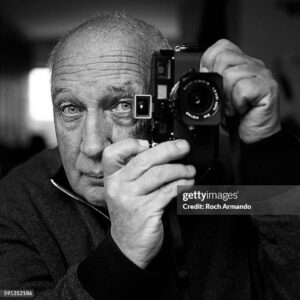
Raymond Depardon
Depardon acknowledged an aesthetic and ethical debt to Paul Strand in relation to his photographic approach.
Verified 2026-08-31La France de Raymond Depardon | Éditions de la Bibliothèque nationale de France
Influence & affinity
Lewis Hine
Lewis Hine, a documented social photographer, taught Strand photography during his school years, introducing him to the power of the camera as a tool for social reform and documentary observation. This early education planted seeds for Strand's later social landscape and humanist studies, such as his Italian village and Mexican portfolios.
Verified 2026-09-06Wikipedia – Paul Strand
Paul Strand: Master of Modern Photography (opens a new site)
Philadelphia Museum of Art’s exhibition resource surveys Strand’s work from the 1910s through the 1960s. It outlines his experiments in abstraction and candid street portraiture, close studies of natural and machine forms, international place-based projects, films, and photobooks. The page also documents the museum’s unusually comprehensive Strand holdings and provides a detailed chronology and selected works.
Paul Strand in the Hebrides (opens a new site)
A V&A video about Strand’s 1954 visit to South Uist in the Outer Hebrides and the resulting book Tir a'Mhurain. The resource characterizes the photographs as a record of rural island community life and its open landscape. It also includes memories from three people photographed as children in the Hebrides series.
Photograph of Angela Secchi by Paul Strand (opens a new site)
A V&A film focused on Strand’s photograph of Angela Secchi for the Un Paese series. It brings together Secchi’s recollection of being photographed at age nine in 1953 with discussion of Strand’s method. The page describes his photographs as carefully staged and posed in pursuit of an authentic account of a particular time and place.
Paul Strand – an introduction (opens a new site)
A V&A video resource in which Martin Barnes, the museum’s senior curator of photographs, discusses Strand’s significance. The accompanying description frames Strand’s long career through his engagement with small communities and his effort to convey the people and places he photographed with a sense of authenticity.
COMMUNITY DISCUSSION
Discuss this entry
Share interpretations, reading notes, and source-aware questions. For catalog corrections, use the feedback form below.
No discussion yet. Start the first focused conversation.
Sign in to join the discussion.
Optionally receive a digest when related photobooks are added to the catalog.
See something incorrect? Sign in to suggest a correction or report an issue.