Photographer
Raghubir Singh
Raghubir Singh (1942–1999) was an Indian photographer widely regarded as a pioneer of color street photography. At a time when black-and-white dominated serious photographic practice, Singh championed color as an essential medium for capturing the vibrancy and complexity of Indian life.
His work is characterized by dense compositions, layered perspectives, and a masterful use of color, often drawing on the visual traditions of Indian miniature painting and Western modernist photography. Singh photographed extensively across India, capturing everyday scenes, public spaces, and the dynamic interplay of people and environment.
His photobooks, including River of Colour and A Way Into India, are considered seminal works in the history of color photography and photobook publishing. For collectors, Singh’s work holds major historical importance, representing a foundational shift in the acceptance of color photography within both documentary and artistic contexts.
Raghubir Singh was an Indian photographer known for pioneering vibrant color in street and documentary photography. He was born in Jaipur in 1942, worked extensively across India, and published influential monographs such as ‘The River of Colour’. His approach combined the spontaneity of Cartier-Bresson with the chromatic traditions of Indian miniature painting. Singh passed away in New York in 1999, leaving a rich body of work that has been exhibited worldwide and collected by major museums.


Selected Works & Key Projects
A source-backed introduction to individual photographs and significant bodies of work.
Key projects
Project · 1992
The Ganges
Published by Aperture in 1992, The Ganges is one of Singh’s book-length photographic projects. The Met identifies Singh’s books as a central platform for his artistic vision: he edited and sequenced their photographs with meticulous care, rather than treating them as incidental reproductions. This project merits selection because it demonstrates the importance of the photobook to Singh’s practice and joins the geographically focused publications through which he framed contemporary India in relation to history and legend.
View source ↗Selected photographs
1967 · Monghyr, Bihar, India
Monsoon Rains, Monghyr, Bihar
This 1967 chromogenic print shows four women gathered on the Ganges riverbank during the monsoon. Singh considered it his first successful photograph, making it an essential early work rather than a representative image selected only for its subject. The Met relates its closely grouped figures and wet saris to classical drapery, and identifies the image as announcing his enduring concern with India’s geographical culture: the interdependence of land, climate, tradition, and communal life. It merits selection as a documented point of departure for that lifelong photographic preoccupation.
Work source ↗1967 · Benares, Uttar Pradesh, India
Chess Players, Monsoon Floods, Benares, Uttar Pradesh
Made in 1967 and printed in 1991, this chromogenic print records two men absorbed in chess amid floodwater in Benares. The Met places Singh in the small-format street-photography lineage associated with visual surprise and spontaneity, while distinguishing his exclusive commitment to color and compositions of Mughal-miniature-like complexity. A Met essay specifically calls attention to the players’ intense concentration despite the inundation. The photograph merits selection because its ordinary game, extreme weather, and layered visual organization give unusually concise form to those documented concerns.
Work source ↗1987 · Calcutta, West Bengal, India
A Taxi Driver, Calcutta, West Bengal
A Taxi Driver, Calcutta, West Bengal is a 1987 chromogenic print. The Met describes modern India’s culture and landscape as Singh’s lifelong subject, and identifies his photographs with a small-format street tradition shaped by surprise and spontaneity. It also notes his exclusive use of color and graphic complexity comparable to Mughal miniatures. This photograph merits selection as a city-based example from the Met collection through which those broader formal commitments can be studied in a named urban setting, rather than only through generalized accounts of his career.
Work source ↗1989 · Bombay, Maharashtra, India
Zaveri Bazaar and Jeweller's Showroom, Bombay, Maharashtra
This 1989 chromogenic print looks onto a busy Bombay intersection through a plate-glass window. The Met identifies the scene as an image of the city’s surging energy and functional mayhem, while its account of Singh’s practice emphasizes his exclusive use of color, spontaneous street vision, and complex compositions. It merits selection because the window introduces a documented visual condition of looking through glass while the subject concentrates the metropolitan intensity central to the museum’s reading. The work is therefore a strong individual entry point to Singh’s Bombay photographs.
Work source ↗1992 · Bombay, Maharashtra, India
Dhabawallah, or Professional Lunch Distributor, Bombay, Maharashtra
This 1992 chromogenic print portrays a Bombay lunch distributor, or dhabawallah. The Met explains that Singh turned to Bombay in the early 1990s and describes these street scenes as energized compositions in which gestures, hands, and gazes circulate around a still center, often an individual who either resists or directly meets the camera. The museum identifies that structure in this portrait. It merits selection because it gives a precise occupational subject to Singh’s Bombay work while making his compositional strategy and charged encounter with the camera especially legible.
Work source ↗-
1962–1965
Education
Studies with Henri Cartier-Bresson
While not formally enrolled, Singh met Henri Cartier-Bresson in Paris in the early 1960s and was deeply influenced by his ideas on 'the decisive moment' and color photography. This encounter shaped Singh's approach to street photography in India, blending Cartier-Bresson's compositional rigor with vivid color.
Source: Wikipedia (Raghubir Singh) Verified Sep 4, 2026
-
1966–1967
Career milestone
First monograph 'Kashmir' published
Singh's first book, 'Kashmir,' was published in 1967, marking his debut as a photographer documenting the landscapes and people of the Kashmir region. The book established his early style of color photography and regional focus.
Source: Wikipedia (Raghubir Singh) Verified Sep 4, 2026
-
1971
Career milestone
Begins documenting Indian street life
In the early 1970s, Singh began his long-term project documenting the streets of Indian cities, particularly Kolkata, Varanasi, and later Mumbai. His work captured the interplay of light, color, and motion in everyday urban life, pioneering a distinctly Indian vision of color street photography.
Source: Wikipedia (Raghubir Singh) Verified Sep 4, 2026
-
1977–1978
Photobook
Portfolio 'The Ganges' published
Singh's publication 'The Ganges' (1974, but expanded in 1977) documented the sacred river and its surrounding life. This work combined intimate portraits with expansive landscapes, earning him international recognition for his sensitive depiction of spiritual and everyday scenes.
Source: Wikipedia (Raghubir Singh) Verified Sep 4, 2026
-
1980–1985
Series
Series on Indian railways and urban life
Throughout the early 1980s, Singh created a body of work focusing on Indian railways and the bustling urban environments of cities like Calcutta and Delhi. He captured the energy of commuters, vendors, and landscapes, contributing to his reputation as a master of street photography.
Source: Wikipedia (Raghubir Singh) Verified Sep 4, 2026
-
1982
Award
Second Prize, World Press Photo (Daily Life)
Singh received second prize in the Daily Life category at the 1982 World Press Photo competition for a photograph depicting daily life in India. This international recognition affirmed his ability to capture spontaneous moments with artistic clarity.
Source: World Press Photo Verified Sep 4, 2026
-
1984
Exhibition
Exhibition at the International Center of Photography, New York
Singh's work was displayed at the International Center of Photography (ICP) in New York, bringing his Indian color photography to a wider American audience. This exhibition helped solidify his reputation as a leading figure in contemporary color photography.
Source: Wikipedia (Raghubir Singh) Verified Sep 4, 2026
-
1986
Exhibition
Exhibition at the Museum of Modern Art, New York
The Museum of Modern Art (MoMA) in New York exhibited Singh's photographs, marking his inclusion in the canon of major international photographers. His works were shown alongside contemporaries who were redefining documentary and color photography.
Source: MoMA Verified Sep 4, 2026
-
1990
Photobook
Publication of 'River of Colour'
Singh's book 'River of Colour' (1990) explored the Ganges as a metaphor for Indian civilization, combining photographs with essays. The work was praised for its innovative use of color and composition to convey a sense of movement and spirituality.
Source: Wikipedia (Raghubir Singh) Verified Sep 4, 2026
-
1999
Photobook
Publication of 'A Way into India'
Near the end of his life, Singh published 'A Way into India,' a personal visual essay that reflected on his decades of photographing the subcontinent. The book served as a retrospective and philosophical statement on the relationship between photography and Indian identity.
Source: Wikipedia (Raghubir Singh) Verified Sep 4, 2026
-
1999
Career milestone
Death in New York
Raghubir Singh died on April 18, 1999, in New York City, at the age of 56. His legacy as a pioneer of color street photography in India has continued to influence subsequent generations of photographers.
Source: Wikipedia (Raghubir Singh) Verified Sep 4, 2026
-
2017
Archive
Archive acquired by the Metropolitan Museum of Art
In 2017, The Metropolitan Museum of Art (Met) in New York announced the acquisition of Raghubir Singh's photographic archive, including prints, negatives, and contact sheets. This institutional acquisition secures his legacy and makes his work accessible for scholarly research and exhibitions.
Source: The Metropolitan Museum of Art Verified Sep 4, 2026
Collection
Metropolitan Museum of Art
The Metropolitan Museum of Art in New York holds original color photographs by Raghubir Singh, recognizing him as a pioneer of Indian street photography in color. His images, depicting urban life and the Ganges region, are part of the museum's permanent photography collection, reflecting his international influence.
Verified 2026-09-04Wikipedia
Collection
Museum of Modern Art
The Museum of Modern Art (MoMA) in New York includes Raghubir Singh's work in its photography collection. MoMA's acquisition of his images highlights his contributions to color photography and his documentation of modern Indian society, situating him within the broader context of international photographic practice.
Verified 2026-09-04Wikipedia
Collection
Victoria and Albert Museum
The Victoria and Albert Museum in London holds photographs by Raghubir Singh, reflecting his standing as a significant recorder of Indian life. The museum's collection of his color prints underscores his importance in shaping perceptions of South Asian visual culture through documentary photography.
Verified 2026-09-04Wikipedia
Publishing relationship
Thames & Hudson
Thames & Hudson published several of Raghubir Singh's influential photography books, including 'The Ganges' (1985). This publishing house brought his color documentation of Indian riverscapes and urban life to international audiences, contributing to his global recognition.
Verified 2026-09-04Wikipedia
Influence & affinity
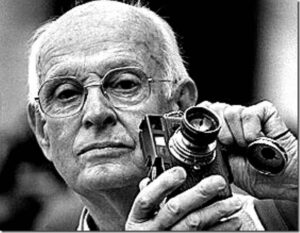
Henri Cartier-Bresson
Raghubir Singh was profoundly influenced by Henri Cartier-Bresson's concept of the 'decisive moment', but Singh adapted it to color photography. He acknowledged Cartier-Bresson's guidance in his approach to composition and timing, while insisting on color as essential to representing India's vibrant visual culture.
Verified 2026-09-04Wikipedia
India Before Instagram in the Magnificent Photographs of Raghubir Singh (opens a new site)
Andrea K. Scott’s New Yorker profile introduces Singh through his 2017 Met Breuer retrospective and gives focused attention to his early development. It records his 1967 New York Times Magazine cover, identifies Monsoon Rains, Monghyr, Bihar as a work he considered his first mature artistic photograph, and explains the centrality of color to his thinking. It is a concise editorial resource for connecting biography, technique, and individual photographs.
India in Full Color (opens a new site)
Max Campbell’s Aperture essay reviews Singh through the 2017 Met retrospective and addresses the role of his geographically organized photobooks. It discusses how his pictures use reflection, multiple focal points, visual parallels, and crowded compositions rather than visual simplification. The article is especially useful for readers studying Bombay: Gateway of India, his engagement with Indian court painting, and the way color served his attempt to join modernist photography to Indian aesthetic traditions.
Raghubir Singh: How one man set the palette for colour photography in India (opens a new site)
Phalguni Desai’s article considers Singh’s color practice, his use of transparency film and flash, and his resistance to exoticizing everyday Indian life. It incorporates testimony from photographers Swapan Parekh, Ketaki Sheth, Sooni Taraporewala, and Ram Rahman, including discussion of Singh’s mentoring and photobook editing. The illustrated article is useful for studying his continuing influence on later Indian photographers as well as his pictures from Calcutta, Bombay, Bihar, Gujarat, and the Grand Trunk Road.
COMMUNITY DISCUSSION
Discuss this entry
Share interpretations, reading notes, and source-aware questions. For catalog corrections, use the feedback form below.
No discussion yet. Start the first focused conversation.
Sign in to join the discussion.
Optionally receive a digest when related photobooks are added to the catalog.
See something incorrect? Sign in to suggest a correction or report an issue.