
Preview Pages
Preview note
These previously imported sample images have not yet been matched to this specific edition.
Videos
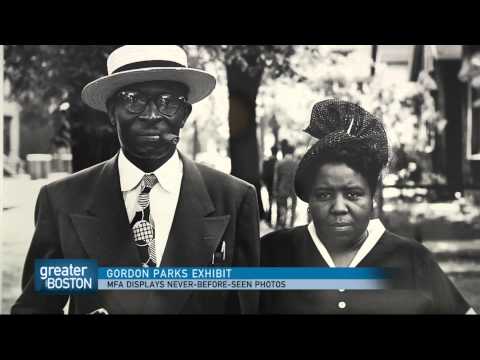
Progress Through The Lens Of Gordon Parks
Reviews & Articles
‘A Long Hungry Look’: Forgotten Gordon Parks Photos Document Segregation
In 1950, Gordon Parks, the only African-American photographer working for Life magazine, returned to his segregated hometown school in Fort Scott, Kansas, to photograph his classmates and document segregation. Despite the significance of the project, Life never published the photos or Parks’ accompanying text, leaving these powerful images hidden for more than 60 years. An exhibition at the Museum of Fine Arts in Boston will finally showcase these never-before-seen photos, providing a poignant look at racial segregation and African-American life before the civil rights movement.
Read Article
Gordon Parks
The exhibition ‘Gordon Parks’ at the Museum of Fine Arts, Boston, showcases groundbreaking photographs taken by Gordon Parks in Fort Scott, Kansas, during the 1940s. The images capture the realities of life under segregation. Parks, the first African American full-time photographer at LIFE magazine, returned to his hometown in 1950 to document the everyday lives of African American citizens around the time before the Civil Rights movement. His photo essay titled “Back to Fort Scott” was never published but offers a rare and visually rich perspective on segregation-era America.
Read Article
Meet Rosa
The article explores the pervasive system of racial segregation under Jim Crow laws in the American South, illustrating how legal decisions and local ordinances enforced “separate but equal” spaces. It details how African Americans faced segregation in transportation, public facilities, housing, and daily activities through signs, laws, and architectural designs that maintained racial separation and reinforced institutional racism. Personal accounts highlight the social realities of navigating these spaces, emphasizing the dangers and restrictions imposed on African Americans. The narrative also connects the rise of such segregation with urban growth and the eventual civil rights challenges sparked by figures like Rosa Parks.
Read Article
COMMUNITY DISCUSSION
Discuss this entry
Share interpretations, reading notes, and source-aware questions. For catalog corrections, use the feedback form below.
No discussion yet. Start the first focused conversation.
Sign in to join the discussion.
See something incorrect? Sign in to suggest a correction or report an issue.