Aporia

Aporia

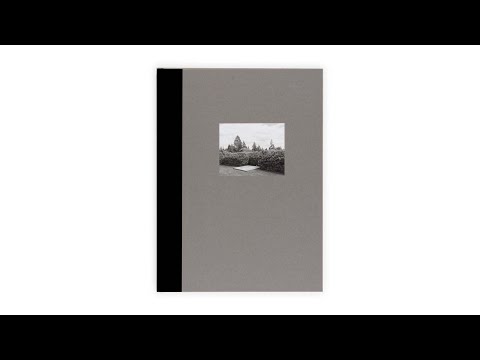
Hardcover with a tipped-in cover image hardcover English 112 pages 23.5 × 32 cm Print run 500

Description

Andrew Waits began Aporia while Seattle was changing around him. Most of the photographs come from a city he had known since childhood, at a time when rapid building was changing how people moved through it. His subject is also the uncertainty that can come from living inside a place whose economic and physical changes are more readily seen in fragments than understood as a whole.

Waits arranges black-and-white photographs as a fictional sequence drawn from observed places. A toppled tree crowds a spread with branches. A tall band of light hangs over one small city view; buildings and columns catch light elsewhere in the sequence. Human figures appear intermittently and are often close to the frame’s edge. In some of the darkest spreads, the difficult act of looking for a face or gesture makes a person’s presence unusually insistent.

Aaron Bloom’s design uses a grey board with a tipped-in landscape and shifts between photographs surrounded by white and dark pictures that cross the gutter. That switch changes the pressure a page can exert. The small city picture remains contained within its margins, while a dark encounter seems to expand beyond its paper. The book ends with Guy Debord’s words from Critique of Separation, another way in to the question of what can be grasped in a walk through a city.

For collectors, the first 500-copy Dalpine and Fiebre printing makes the transformation from working dummy to bound object visible in the care given to these spatial differences. The dummy’s Fiebre award led to publication. This edition offers a way to study how photographs of development can carry the unsettled feeling of moving through it over time.

Preview Pages

Videos
Aporia — Fiebre Photobook flip-through

Reviews & Articles

An Interview with Andrew Waits – Discussing Aporia and the Requirements of Capitalism

Waits tells Brad Feuerhelm that most of the photographs were made in Seattle and describes spacing out his dance-club portraits. Darkness isolates their subjects and lets the viewer step back from an overwhelming city. Their conversation works between the city’s redevelopment, the representation of power in built space, and the editing of photographs into a sequence that is partly fictional. Waits’ comments help readers understand how moving among isolated forms and moments of contact can evoke pressure without turning the book into an illustrated urban argument. In their discussion of the third chapter he explains the deliberately hard-to-read photographs of technological interiors. Read Article

Book of the Week: A Selection by Jake Bartman

Jake Bartman follows recurring details of construction and demolition, including dislodged architectural ornament and a temporary fence bent around a bare plot. He connects the photographic sequence with the excerpt from Guy Debord at the back. The review observes the difficulty of making the city’s past, present and future fit into a single story and asks what a reader can learn by moving through seemingly fragmentary views. The details he selects give a practical route into the book’s repetitions and the unresolved feeling produced when recognisable objects are put in new contexts. Read Article

Award history

  • 2018

    Fiebre Dummy Award

    Book publication prize · Winner

    The dummy won in 2018. The award led to Dalpine and Fiebre’s published edition.

  • 2018

    Kassel Dummy Award

    Book publication prize · Shortlisted

    The 2018 Kassel shortlist included the dummy.

  • 2018

    MACK First Book Award

    First PhotoBook · Shortlisted

    Shortlisted as an unpublished dummy in 2018.

COMMUNITY DISCUSSION

Discuss this entry

Share interpretations, reading notes, and source-aware questions. For catalog corrections, use the feedback form below.

My discussions

No discussion yet. Start the first focused conversation.

Sign in to join the discussion.