
Preview Pages
Videos
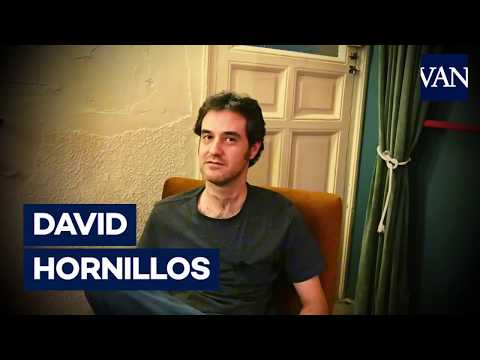
Ustedes, los vivos — La Vanguardia interview
Reviews & Articles
Cuando un proyecto fotográfico desborda a Instagram: el caso de Ustedes, los vivos
Hornillos tells the interviewer why he returned to a railway setting and what drew him to this clearing near Chamartín. He describes the site’s connection with a former cemetery and the mostly 50 mm lens he used during four years of work. The account observes the rising horizon and repeated blue sky, and compares the way a short set of pictures can be seen on a screen with the many views in the printed book. It describes how the object can be read in more than one orientation.
Read Article
Una Biblia en fotos: Ustedes, los vivos
The critic starts from the physical resemblance of this thick little book to a volume made for private reading. The comparison leads into the people crossing the same landscape at different speeds and in different kinds of clothing. The essay follows how the repetitions draw attention both to passing time and to the different characters visible in a single view. Its argument about mortality adds a reading of the sustained sequence, alongside the artist’s own account of photographing the former burial ground.
Read Article
Award history
- 2019
PHotoESPAÑA Book Awards
PhotoBook of the Year · Shortlisted
Dalpine and the photographer report the title on the 2019 shortlist.
- 2019
Rencontres d’Arles Book Awards
Author Book · Shortlisted
Official 2019 Authors’ Books shortlist for the Dalpine book.
COMMUNITY DISCUSSION
Discuss this entry
Share interpretations, reading notes, and source-aware questions. For catalog corrections, use the feedback form below.
No discussion yet. Start the first focused conversation.
Sign in to join the discussion.
See something incorrect? Sign in to suggest a correction or report an issue.